Kenya has received funding to address the consequences of climate disasters.
Kenya became the first African nation and only the second globally to receive support from the Santiago Network for climate disaster loss and damage.
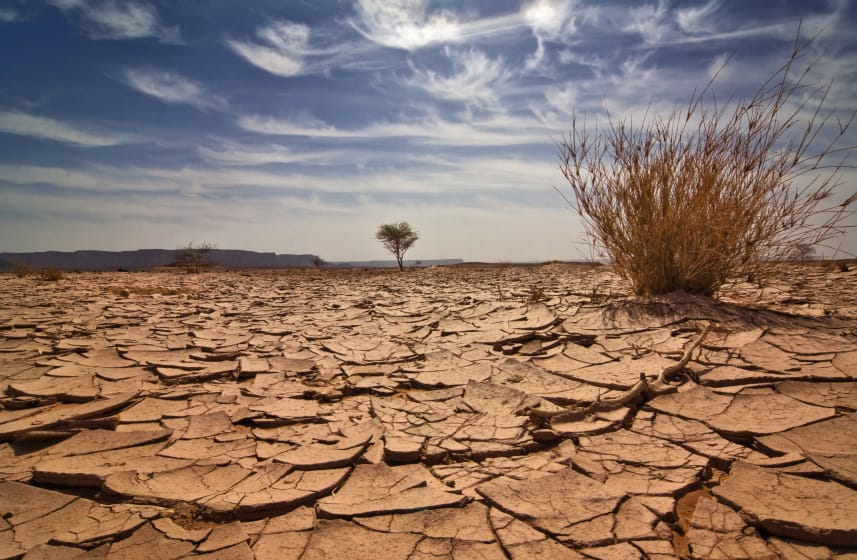
For the first time, an African country gains access to a new climate risk financing mechanism, reports the Kenyan publication Mongabay.
The Gist
- Kenya has received $700,000 through the UN's Santiago Network on Loss and Damage.
- The funds will be used to calculate climate losses in the country for 2015–2025 — droughts, floods, crops, and livestock.
- The mechanism was created so that developing countries can document damage and qualify for major funding through the Loss and Damage Fund established at COP28 in Dubai in 2023.
- Kazakhstan and Central Asia are high climate risk zones, yet there is no systematic work on documenting international climate funds in the region.
What is the Santiago Network and Why is it Needed
The Santiago Network on Loss and Damage is a Swiss-based mechanism of the United Nations, funded by voluntary contributions from developed countries and the international community. It was established under the UN Framework Convention on Climate Change (UNFCCC) in 2019. The organization's task is to help vulnerable developing countries not only acknowledge the fact of a climate event but also measure it in some countries around the world. The network connects governments with experts, institutions, and technical organizations, enabling the system to build an evidence base.
The significance of the mechanism increased sharply after COP28 in Dubai, where a full-fledged Loss and Damage Fund was created. Access to the fund's money requires documented assessments — this is where the Santiago Network becomes crucial. Without an evidence base, countries simply cannot justify their funding applications.
What Kenya Will Get for This Money
The funding announcement was made by the Principal Secretary of Kenya's Ministry of Environment and Climate Change, Festus Ngeno, at a recent UN climate meeting in Bonn. According to him, Kenya is conducting the first comprehensive assessment in its history of both economic and non-economic losses — loss of cultural heritage, psychological consequences of forced displacement, and ecosystem degradation.
Kenya approaches this with significant accumulated experience: from 2020 to 2023, the country experienced one of the worst droughts in recent times, leaving millions of people in conditions of food insecurity and destroying livestock in arid regions. In March 2026, floods in the country claimed the lives of at least 110 people and forced 34,700 people to leave their homes. Concurrently, in 2025, Nairobi presented an updated Nationally Determined Contribution (NDC) including a reduction in greenhouse gas emissions by 35% by 2035.
Why This Matters for Kazakhstan and Central Asia
Central Asia is one of the most climate-vulnerable regions in the world. Kazakhstan regularly faces catastrophic floods, long-term droughts in the south and east of the country, pasture degradation, and shrinking water resources in the Aral Sea basin. According to Kazhydromet, the average temperature in the country over the last 30 years has increased by 0.3–0.5°C per decade — faster than the global average.
However, systematic work on documenting climate transition in the format accepted internationally is virtually absent. This means that Kazakhstan and neighboring countries cannot yet fully utilize the tools of the Loss and Damage Fund, even based on this objective foundation. The Kenyan precedent shows: the first step is not handing out money, but a built system of accounting and evidence.
Author's Conclusion
Kenya received not just money — it received a methodology and international recognition of its climate vulnerability. For Kazakhstan, where damage from floods in 2024–2025 amounts to billions of tenge, and droughts annually undermine livestock farming in the south of the country, participation in such mechanisms is a matter of strategic advantage. The Ministry of Ecology and Natural Resources of the Republic of Kazakhstan and relevant agencies should study the Kenyan experience and make changes to the submission of applications to the Santiago Network. Time is working against those who do not know how to count their losses.

Comments ()