Lithuania announces €400 million tender — world's first dismantling of RBMK-1500 reactors
Lithuanian state company Altra has launched an international tender for technology development and dismantling of two RBMK-1500 reactor cores at Ignalina NPP. Contract value: ~€400 million, duration: 16 years.
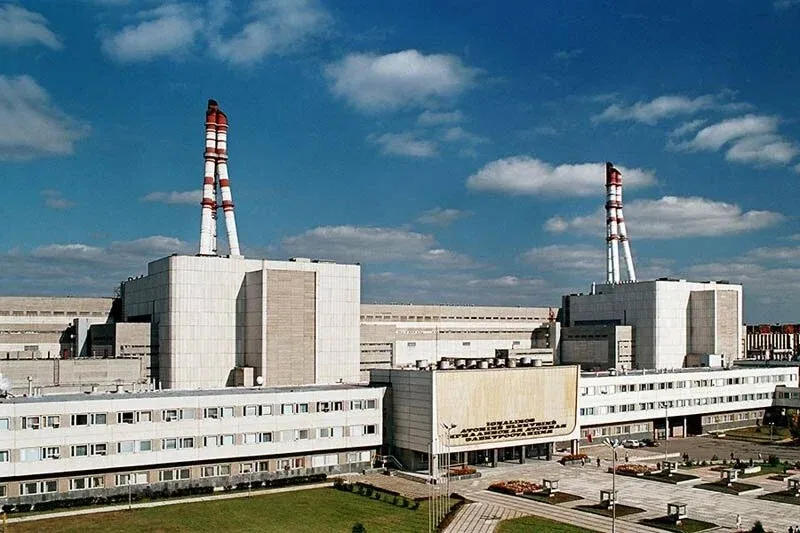
The technology for this project does not yet exist: no country in the world has dismantled reactors of this type, reports the publication Atomic Energy 2.0. For Kazakhstan, which is planning to build its own nuclear power plant, the Ignalina project is a clear illustration that the life cycle of a nuclear plant does not end with the last kilowatt.
In a Nutshell
- The tender covers the full cycle: development of dismantling technology, licensing, equipment supply, actual dismantling of the reactor cores of both units, and radioactive waste management.
- The dismantling will extract approximately 25,000 tons of materials, a significant portion of which is long-lived radioactive waste.
- The reactor cores are located in shafts with a cross-section of 21×21 meters and a depth of 25 meters — this includes the graphite stack and surrounding structures.
- Technical proposals are accepted until November 5, 2026. The contract is planned to be signed in 2027. Funding is provided through the International Decommissioning Support Fund, managed by the EBRD.
- Full completion of dismantling is scheduled for 2038. The Ignalina Nuclear Power Plant was shut down as a condition for Lithuania's accession to the EU: Unit 1 in 2004, and Unit 2 in 2009.
A Task No One Has Solved Before
General Director of Altra, Linas Baužys, does not hide the scale of the challenge: "This tender is an invitation to the international nuclear community to take part in a project that no one in the world has ever undertaken before. We aim to attract companies with global experience and together implement one of the most complex nuclear reactor dismantling projects in the world."
The complexity stems from the nature of the reactor. The RBMK-1500 is a Soviet-era channel-type reactor with a graphite moderator, with a capacity of 1,500 MW (later reduced to 1,300 MW). Such reactors were built only at Ignalina. The graphite stack of the core, weighing thousands of tons and saturated with neutron radiation over decades of operation, is a unique object for which no ready-made technical solutions exist. Developing these solutions constitutes the first part of the tender contract.
A Two-Stage Tender
The procedure is conducted through the electronic procurement portal of the European Bank for Reconstruction and Development. In the first stage, participants submit technical proposals — until November 5, 2026. In the second stage, financial proposals are submitted. The contract is planned to be signed in 2027, after which a 16-year work cycle will begin.
Acting Minister of Energy of Lithuania, Žygimantas Vaičiūnas, characterized the project as a contribution to the global nuclear legacy: "Lithuania will be the first to dismantle RBMK-1500 reactors. The experience gained and the technological solutions developed will be a valuable contribution for other countries that will face similar tasks in the future."
Among the likely contenders for the contract are Westinghouse and EDF: both consortia received four-year contracts worth €5.5 million each back in 2022 for the preliminary development of dismantling technologies specifically for these reactors.
The Price of Shutdown: €400 Million is Not the Final Figure
The Ignalina Nuclear Power Plant was shut down for political, not technical reasons: its closure was a mandatory condition for Lithuania's accession to the European Union. The country is effectively paying for its EU membership not only through the dismantling of the plant itself — the total cost of decommissioning Ignalina runs into billions of euros and is financed primarily from European funds.
The €400 million tender is just one stage. It will be followed by work on the disposal of radioactive waste, site remediation, and long-term monitoring — all of which will extend for decades beyond 2038.
The Kazakhstan Context
For Kazakhstan, which is choosing a technology and contractor for its future nuclear power plant, the Ignalina precedent raises several uncomfortable but important questions.
First is the total life cycle cost: the investment attractiveness of a nuclear power plant is often viewed through the lens of construction and operation, while decommissioning and waste management are multi-billion dollar expenses that will arise in 60–100 years.
Second is technological dependence: Lithuania is forced to seek international contractors to dismantle a Soviet-era reactor because its own expertise is insufficient. Kazakhstan, by choosing the technology for its nuclear power plant, is simultaneously choosing whom it will depend on, and to what extent, half a century from now.
The law on atomic energy adopted in Kazakhstan and the referendum held give the project a start. The Lithuanian experience serves as a reminder: the start and the finish are parts of the same race.
Author's Conclusion
Lithuania has announced a tender for a project whose technology has not yet been invented — and that is honest. Behind this lies an important principle of nuclear energy: responsibility for a reactor does not end the moment it is shut down, but merely transitions into a new phase. €400 million for dismantling just the reactor cores is a figure worth keeping in mind for everyone discussing the economics of a future Kazakhstani nuclear power plant today.
Comments ()