Livestock breeder warns of risk of mass slaughter in Kazakhstan
Kazakhstan faces a risk of mass cattle slaughter if measures to support the industry are not adopted.
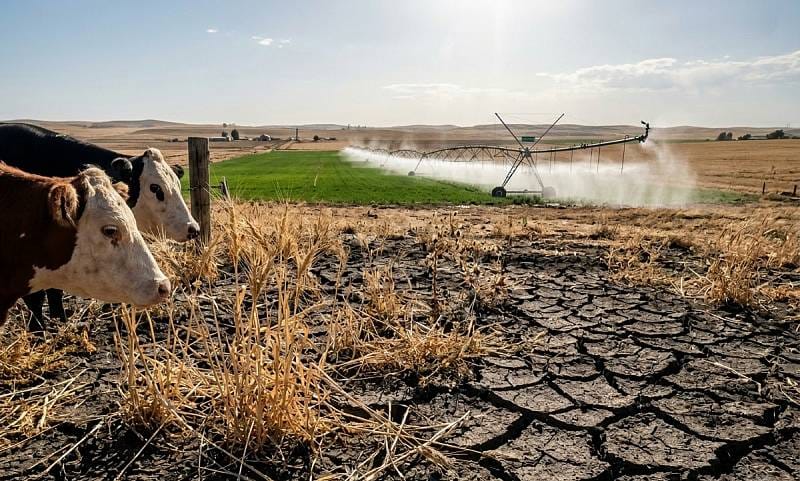
Livestock breeder Abai Kuanysh Suleimenov, formerly Chairman of the Board of Directors of the Republican Chamber Qazaq Aqbas, is concerned about the situation in domestic livestock farming. According to him, livestock farms are currently facing a serious increase in costs, and maintaining the current situation could lead to a reduction in the breeding stock.
In Brief
· Livestock breeder Abai Kuanysh Suleimenov warned of the risk of mass livestock slaughter.
· In his opinion, the cause could be the deteriorating economic situation of farms.
· He identified the situation with feed supply and its cost as one of the key problems.
· As a solution, the expert proposes strengthening state support for livestock breeders and revising approaches to the development of the industry.
"There is a Risk of Mass Livestock Slaughter"
According to Abai Kuanysh Suleimenov, many farms are currently operating on the verge of profitability. Rising resource prices, difficulties in keeping animals, and weak production economics are forcing farmers to find ways to cut costs.
"There is a risk of mass livestock slaughter. If the situation does not change, many farms will be forced to make such decisions," stated Suleimenov.
In his opinion, the most alarming concern is the possible reduction of the breeding stock, as its restoration would require several years and significant financial costs.
Feed is Becoming One of the Main Risk Factors
The expert paid special attention to the situation with the feed supply. According to him, in a number of regions, livestock breeders are facing rising feed costs and uncertainty regarding the future harvesting campaign. This directly impacts the production cost of beef and the maintenance of breeding stock.
Suleimenov noted that in the absence of sufficient supplies of affordable feed, farms often face a choice — to continue operating at a loss or to reduce their livestock numbers.
"Livestock farming is currently in a very difficult situation," he emphasized.
What Solution Does the Expert Propose
According to Suleimenov, it is still possible to avoid a negative scenario. To do this, he believes, timely state support measures are needed, aimed primarily at preserving the breeding stock and providing farms with feed.
"I am not indifferent to everything that is happening in the agriculture of our country. And now, traveling around our region, seeing how the heat this year is burning fields and hayfields, I would like the akimat of the region, the department of agriculture, and preferably the Ministry of Agriculture, to develop a plan and a solution to establish communication between regions and help provide the affected districts and regions with feed to preserve livestock farming, which will be very vulnerable. And the lack of feed will force a reduction in livestock numbers," writes Kuanysh Suleimenov.
The expert also advocates for a more systematic approach to the development of beef cattle farming, including creating predictable conditions for producers, increasing the economic efficiency of the industry, and supporting farmers during periods of unfavorable market conditions.
In his opinion, such measures will help preserve the production potential of the industry and avoid forced reductions in livestock numbers.
What This Means for Kazakhstan
The problem of economic sustainability of beef cattle farming remains one of the key issues for the country's agro-industrial complex. Preserving the breeding stock determines not only future beef production volumes but also the development of pedigree livestock farming.
Earlier, Hunn.kz reported on the results of the state audit of the water sector, where one of the problems cited was the insufficient efficiency of natural resource use. For livestock farming, this issue is also of fundamental importance, since providing farms with feed directly depends on the condition of pastures, irrigated lands, and water management infrastructure. At the same time, the editorial board regularly covers issues of veterinary safety, pedigree breeding, and state support for the agro-industrial complex, which together determine the sustainability of the industry.
Author's Conclusion
The assessment voiced by Abai Kuanysh Suleimenov is not an official forecast, but it reflects the concern of part of the professional community about the state of beef cattle farming. If the outlined problems do lead to a reduction in the breeding stock, the consequences could affect the industry for several subsequent years. This is precisely why the discussion today is not so much about current prices for meat or feed, but about preserving the production potential of Kazakhstani livestock farming.

Comments ()