Mongolia has strengthened security measures following an outbreak of a new type of foot-and-mouth disease.
A SAT-1 foot-and-mouth disease outbreak, previously unseen in Mongolia, has been recorded in the western border region.
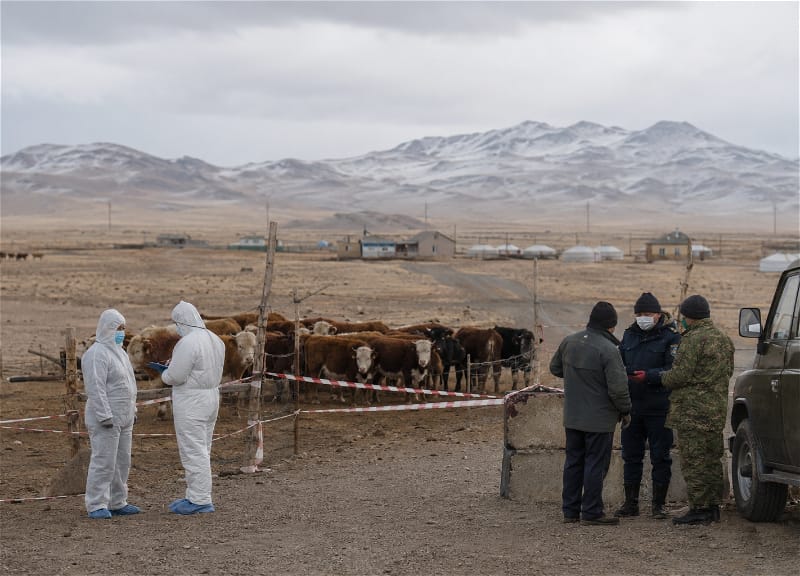
The authorities of Khovd aimag have declared a high alert mode, strengthened veterinary control, and launched emergency anti-epizootic measures. The situation is drawing heightened attention from neighboring countries, including Kazakhstan, due to the risk of the infection spreading through the movement of animals and livestock products.
In a nutshell
• A new type of foot-and-mouth disease, SAT-1, has been detected in Khovd aimag, previously unseen in Mongolia.
• A high alert mode was introduced on June 8, 2026.
• 318 animals have been culled in two districts, and the number of infected livestock has reached 411 head across 39 farms.
• Mongolia has ordered 1.5 million doses of a vaccine against the new virus type from Russia.
What happened in Khovd
The local emergency commission has banned any mass gatherings and introduced additional restrictions. The most tense situation is observed in the Bulgan and Uench districts, where veterinary services have already culled 318 animals showing signs of infection.
According to the veterinary department, by noon on June 8, the number of infected livestock had reached 411 head across 39 farms. The Russian vaccine against the SAT-1 type had not yet been delivered at that time.
Why the SAT-1 type is causing concern
Foot-and-mouth disease is one of the most contagious viral diseases of cloven-hoofed animals. The virus spreads rapidly both through direct contact between animals and via airborne transmission. The economic damage from outbreaks is associated not only with livestock mortality and forced culling but also with restrictions on trade in animals and livestock products.
Of particular concern is that SAT-1 had not previously been recorded in Mongolia. The emergence of a new virus type requires adapting the veterinary control system and conducting large-scale vaccination.
What measures is Mongolia taking
The head of Mongolia's Emergency Management Agency, Gombojavyn Ariunbuyan, reported that the country has ordered an initial batch of 1.5 million doses of vaccine from Russia. The authorities plan to use it to contain the outbreak and prevent further spread of the disease.
Additionally, monitoring of animal movement has been intensified, and veterinary services are inspecting farms in border areas.
Why this matters for Kazakhstan
For Kazakhstan, the situation is significant due to the proximity of the outbreak to the Chinese border and the high mobility of livestock regions in Central Asia. Even a local foot-and-mouth disease outbreak can affect veterinary control, supply logistics, and trade in livestock products.
Experts traditionally consider early detection, restricting animal movement, and prompt vaccination as key factors in containing such diseases. The provided materials do not report any cases of SAT-1 on the territory of Kazakhstan.
Author's conclusion
The SAT-1 outbreak in Mongolia demonstrates how quickly new types of veterinary diseases can create risks for the entire region. For Central Asian countries, the main task is to strengthen border veterinary control, prepare for emergency vaccination, and coordinate actions between neighboring states.

Comments ()