Paradoxes of economic growth in Lombardy
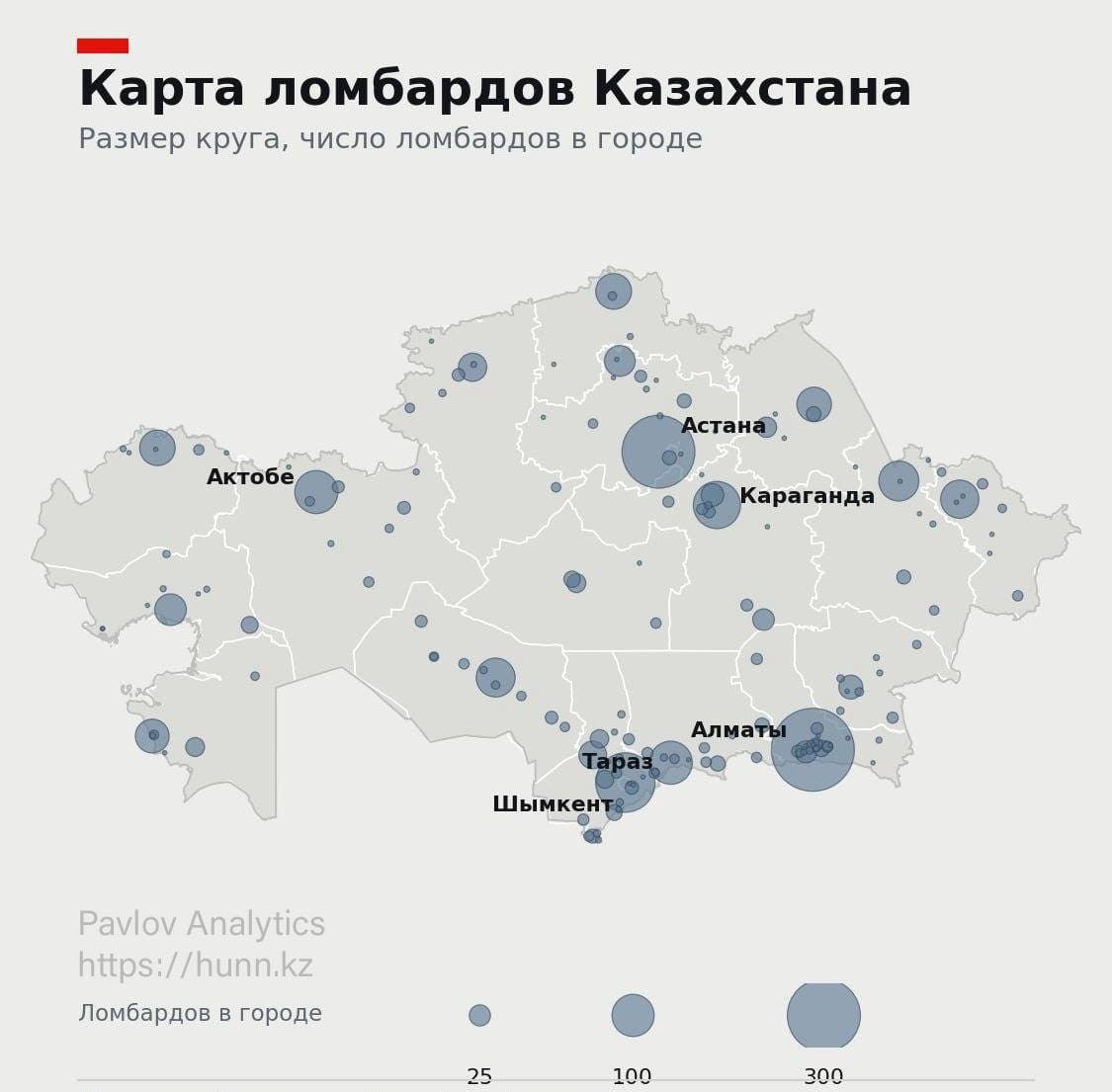
Official economic reports show a steady improvement in the situation — wage growth is recorded, inflation is under control, and the reforms being implemented are highly effective. However, the real structure of consumer behavior contradicts macroeconomic statistics: instead of the expected boom in delivery services, coffee shops, or shopping malls, the country is witnessing a rapid expansion of pawnshops.
In short
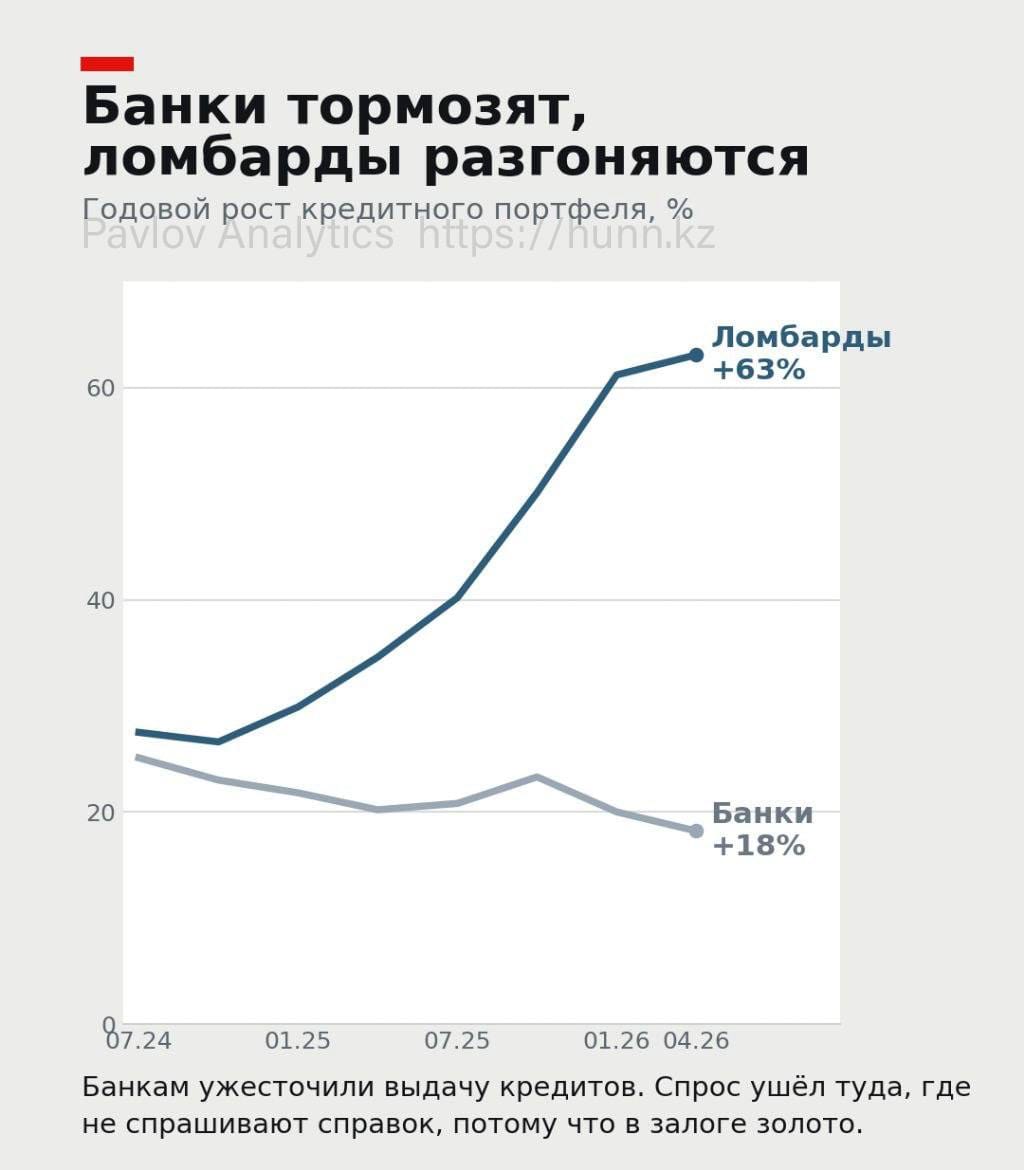
The pawnshop market is showing abnormal growth of 63% per year, outpacing bank lending rates by almost four times.
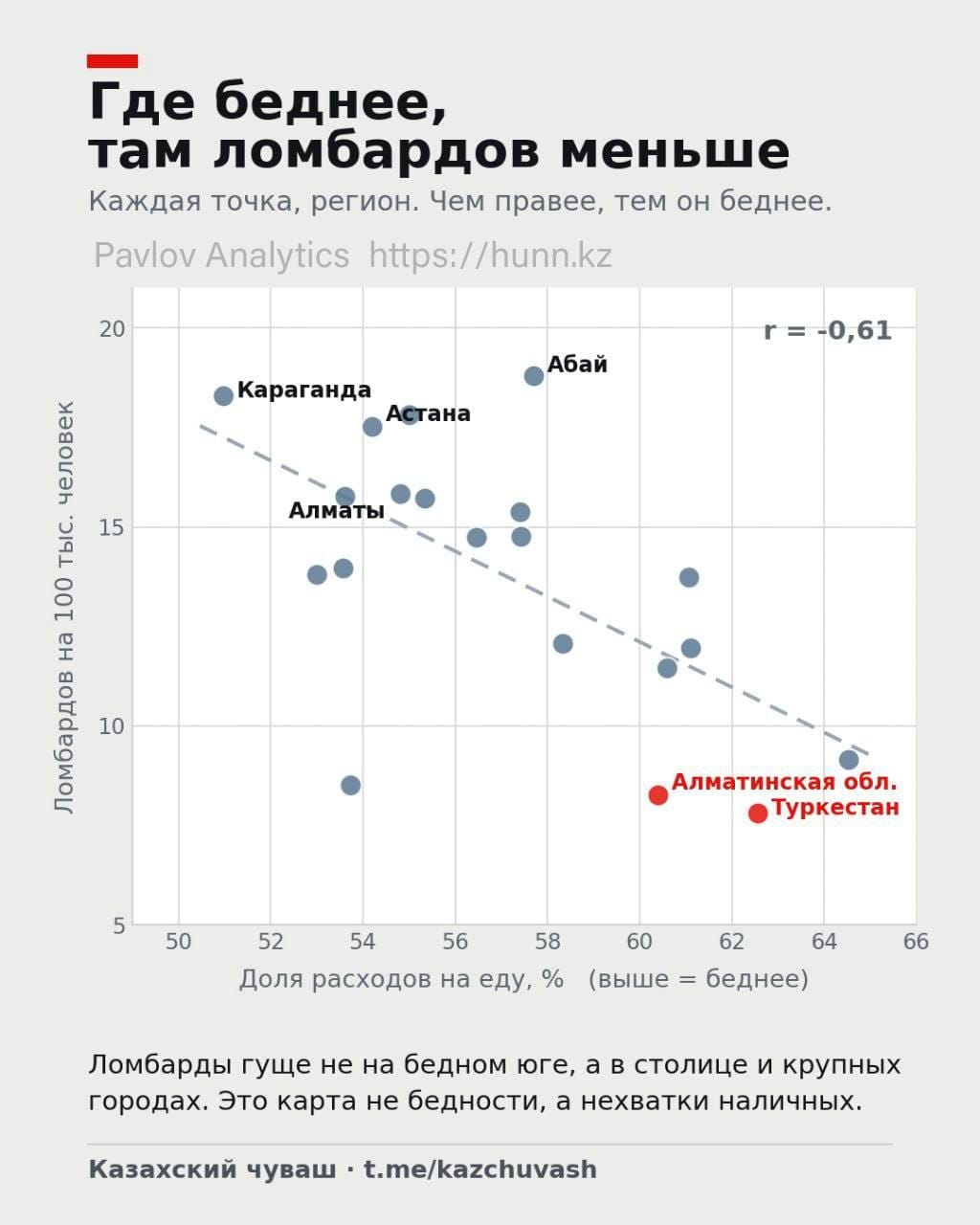
The density of pawnshop locations is highest in the capital and major cities, indicating cash flow gaps among the urban population. Seven largest companies control two-thirds of the market, increasing the sector's total profit to 32.1 billion tenge. The industry is lobbying to be removed from strict regulatory control, attempting to switch to a self-regulation format.
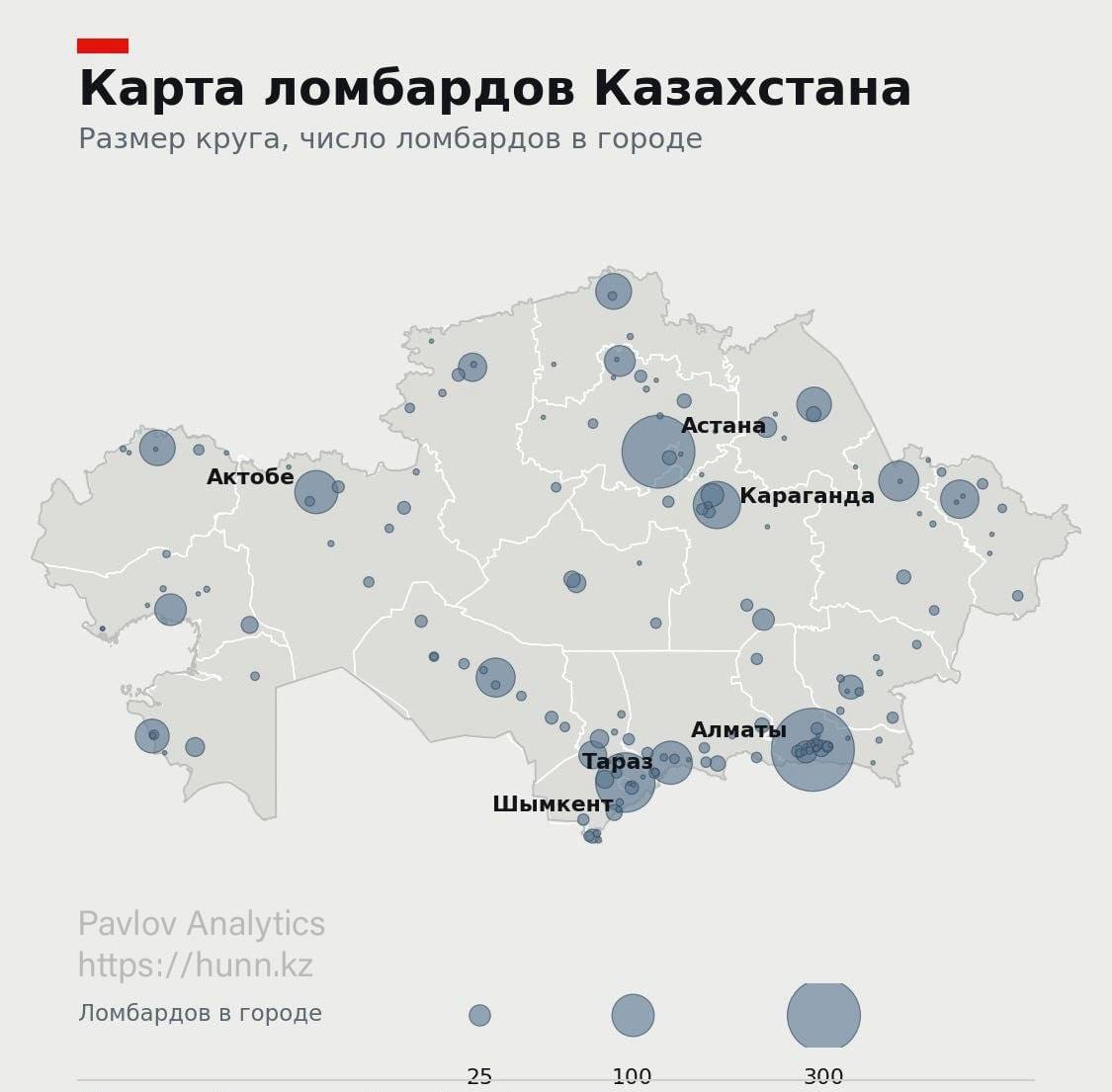
The map records 2,754 locations across the country. The sector is growing by about 63% per year, while bank lending is growing by 18%. The choice of citizens is obvious.
Very importantly, the density of pawnshops is highest not in the agricultural south, but in the capital and large cities. This is not a map of poverty, but of those citizens who have something to pawn — gifted earrings, a phone, or a car — but have no buffer until payday. If the standard of living is truly rising, then why do people have to pawn things to make it to payday?
There is an explanation, however. Last year, banks tightened lending to reduce the debt burden on the population. Demand has not disappeared, but has shifted to places that don't ask for income statements or credit history, because the collateral is physically taken.
Capital concentration and lobbying the rules of the game
The business is quite profitable; the sector's profit has grown from 13.7 to 32.1 billion tenge over two years. About two-thirds of the market is controlled by just seven largest pawnshops: "M-Pawnshop", "MK-Pawnshop", "Safe-Pawnshop", "mk-Gold Pawnshop", "Astra-Pawnshop", "Money to the People", and Birinshi Lombard.
And these seven are already working proactively. Through the National Pawnshop League, the industry is negotiating with the regulator and asking to be moved into a separate segment, apart from microfinance organizations, and to be exempt from restrictions on consumer loans.
A separate point is their own self-regulatory organization, to which the regulator would transfer part of the oversight: data collection, control over credit policy, handling complaints. Simply put, the largest players want to write the rules by which they themselves will be checked. On paper, this is called self-regulation. In essence, the market is being asked to be placed under the supervision of those who profit from it.
Statistical manipulations and reality
At the same time, according to the official register, there are fewer pawnshops: 466 compared to 603 in 2021. On paper, the market is shrinking, but you wouldn't know it from the signs on the streets.
Trusting your own eyes or official statistics is everyone's choice.
Author's conclusion
The tightening of banking regulation has led to the expected outflow of borrowers to the shadow and semi-gray sectors, where the cost of resources for the population is significantly higher. The desire of the largest market players for self-regulation is an attempt to lock in excess profits and minimize government intervention in a situation where the urban population is increasingly dependent on short-term collateral loans.
#analytics #featured



Comments ()