Portugal's largest solar plant goes bankrupt due to solar energy surplus.
Portugal's largest solar plant faces bankruptcy — not due to failure, but because of the industry's own success.
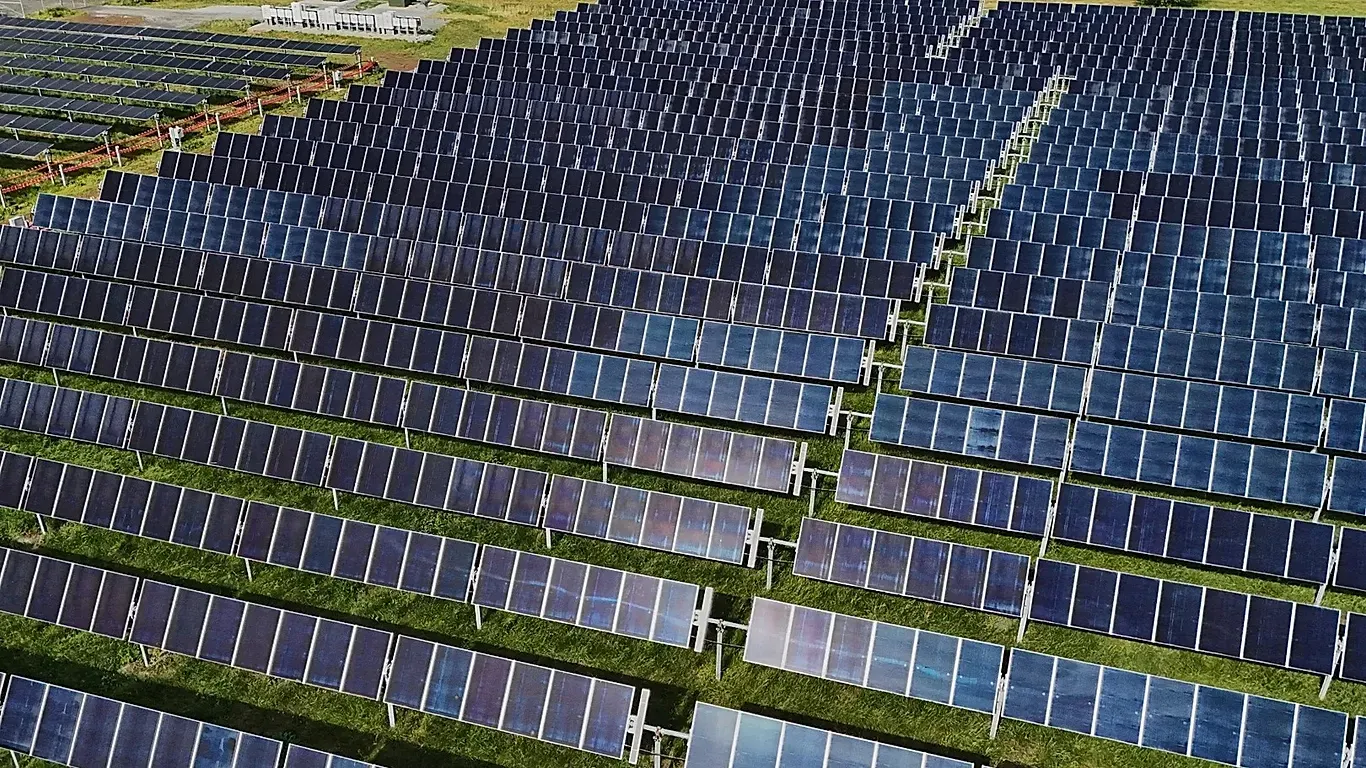
Too many solar panels on the Iberian Peninsula have driven electricity prices down so much that even a flagship project has stopped generating enough revenue, Euronews reports.
The gist
- British company Welink Energy Portugal 2 UK, which owns Portugal's largest solar power plant Solara4 (219 MW, Algarve region), has initiated insolvency proceedings.
- The reason is not an accident but market dynamics: excessive growth in solar capacity on the Iberian Peninsula has driven down wholesale electricity prices, which at times fall to zero or go negative.
- The project had already faced difficulties over its five years of operation — output consistently remained below forecasts, compounded by disputes with Chinese contractor China Triumph International Engineering, fires, and technical failures.
- An ambitious €400 million plan to turn the plant into a hybrid complex (an additional 50 MW of solar, 264 MW of wind, and 100 MW of storage) received a negative environmental assessment and was never implemented.
What went wrong technically and commercially
According to a report by consulting firm BDO, cited by Portuguese weekly Expresso, Solara4 "experienced a combination of operational and market challenges" that adversely affected its performance and cash flow. The plant, launched in 2021, consistently fell short of its original electricity output forecasts — even though those very forecasts underpinned the project's financial models at launch.
RES surplus on the Iberian Peninsula
The key cause of the financial problems is not technical but structural: solar generation capacity in Spain and Portugal has grown sharply in recent years. The increased supply of solar energy has driven down wholesale prices, which at certain hours fall to zero or even go negative — meaning producers literally pay to offload surplus energy into the grid. For a plant like Solara4, which depends on selling electricity at market prices, such volatility can crush revenues even when all panels are technically functioning properly.
The failed hybrid project
As early as 2024, Welink planned to solve precisely this problem — turning a purely solar plant into a hybrid complex by adding wind generation and energy storage to smooth output fluctuations and avoid relying solely on sunlight hours. The plan called for an additional 50 MW of solar generation, 264 MW of wind power across 40 turbines, and a 100 MW storage system — more than 600 MW in total upon completion. However, the assessment committee led by the Portuguese Environment Agency issued a negative opinion, deeming the project incompatible with preserving natural values in the affected area. A revised plan with the number of wind turbines more than halved remained stuck at the public consultation stage — the agency never issued a final decision.
Why this matters for Kazakhstan
The Solara4 story is a practical lesson for any country rapidly expanding its share of solar and wind generation, including Kazakhstan. We have already reported that the country commissioned 212 MW of new RES capacity out of ten facilities planned for 2026, and plans to add more than 8 GW by 2035 — given this pace of growth, the Portuguese scenario is worth keeping in mind: without the parallel development of energy storage systems and sufficient grid capacity, rapid growth in solar and wind generation can create the same risks of surplus and wholesale price collapse that Spain and Portugal have already faced. A separate lesson concerns contractors: Welink's dispute with Chinese counterpart China Triumph International Engineering is another reminder that ownership structure and contract terms with foreign RES project suppliers matter no less than the technology itself.
Author's conclusion
The Solara4 bankruptcy is not a story about bad solar energy per se, but an indication that the maturity of a RES market is measured not only by installed megawatts but also by the power system's ability to absorb that generation without price collapse. The Iberian Peninsula has already gone through a phase where there were physically more solar panels than the grid and market could efficiently absorb — and for countries like Kazakhstan, which are just ramping up their own RES programs, this is an early signal: alongside new panels and turbines, storage and sufficient grid flexibility must be built too, rather than merely chasing the installed capacity figure.

Comments ()