Reactors No One Has Dismantled: Why Lithuania Is the First in the World to Seek a Way to Dismantle Chernobyl’s Legacy
Lithuania will, for the first time, involve international experts to dismantle the RBMK-1500 reactor core at the Ignalina Nuclear Power Plant.
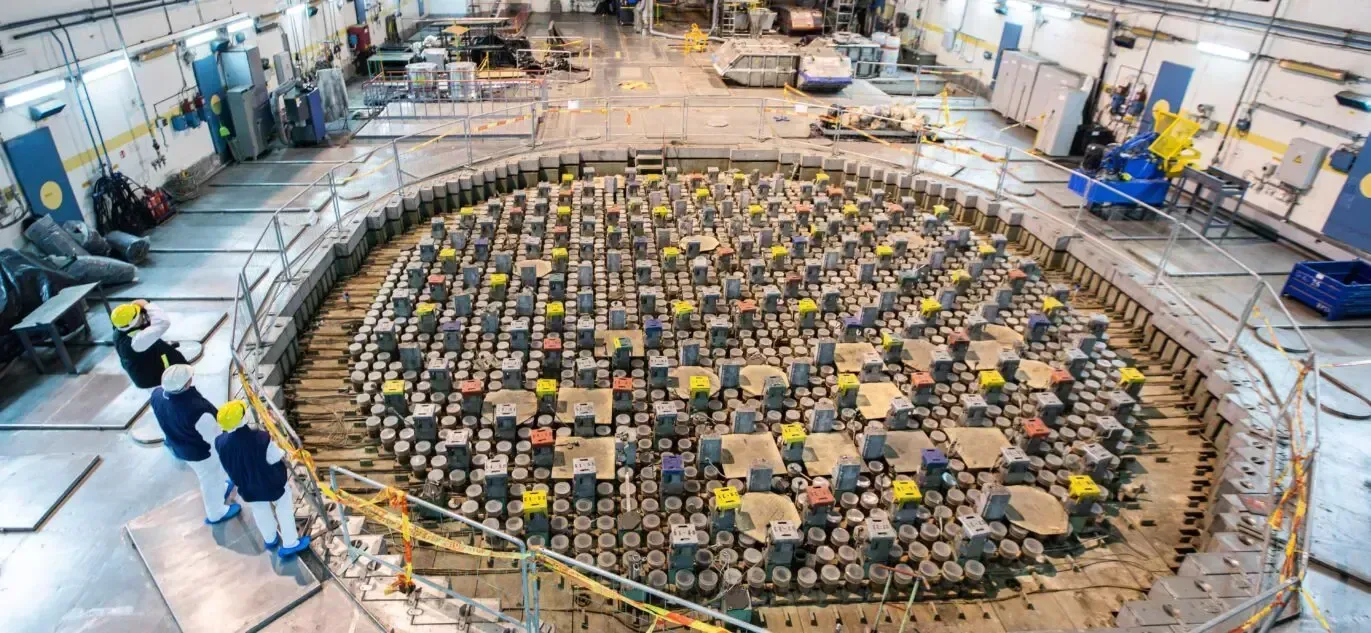
As stated by the station's General Director Linas Baužys, this stage will be the most challenging in the entire history of the plant's decommissioning and, in fact, has no global analogues, writes the publication Atomic Energy.
In a Nutshell
· Lithuania is preparing to dismantle the reactor core of the RBMK-1500 at the Ignalina Nuclear Power Plant.
· Work of this scale will be carried out for the first time in global practice.
· An international tender will be announced for the project to attract specialized experts.
· The Ignalina NPP used reactors from the same family as the Chernobyl NPP.
· Lithuania's experience may be in demand by countries that will have to decommission similar facilities in the future.
Why This is a Historic Stage
In recent years, turbine equipment, pipelines, and the upper and lower reactor structures have already been dismantled at the Ignalina NPP. However, it is the reactor core that remains the most complex part of the project.
It consists of thousands of graphite blocks, technological channels, and metal structures that have been exposed to neutron radiation for decades. After the reactor was shut down, many elements became radioactive, requiring the use of remote technologies, specialized equipment, and complex engineering solutions.
Why No One Has Done This Before
The Ignalina NPP was equipped with RBMK-1500 reactors — the most powerful representatives of the RBMK family.
It was a reactor of the earlier RBMK-1000 modification that operated at the fourth power unit of the Chernobyl NPP.
After the 1986 accident, the construction of new RBMKs practically ceased, and most operating units gradually began to be decommissioned. However, no project in the world has yet reached the stage of complete core dismantling.
In fact, Lithuania is today becoming a testing ground for technologies that may subsequently be used at other facilities of the Soviet nuclear legacy.
What This Means for Kazakhstan
At first glance, the news has no direct relation to Kazakhstan. However, it reflects a new trend in the global nuclear industry.
If previously the main focus was on building new NPPs, today more and more countries are facing a different task — the safe decommissioning of old power units. This is creating a separate market for technologies, engineering solutions, and services worth tens of billions of dollars.
For Kazakhstan, this experience could have practical significance.
The country is only preparing for the construction of its first nuclear power plant, but it is already developing a regulatory framework, a personnel training system, and a long-term strategy for the industry's development. International practice shows that the life cycle of an NPP begins not with the reactor's launch and does not end with its shutdown. Already at the design stage, it is necessary to consider how the facility will be dismantled after 60–80 years of operation.
Furthermore, Kazakhstan has its own history of interaction with the nuclear industry — from the Semipalatinsk Test Site to research reactors and the world's largest uranium reserves. Therefore, issues of safe handling of radioactive materials and the development of relevant competencies have not only energy but also strategic importance for the country.
Author's Conclusion
The news from Lithuania reminds us that nuclear energy is a story spanning nearly a century. Building a reactor is only half the task. It is equally important to understand in advance how it will be safely decommissioned decades later. This is why the dismantling of the Ignalina NPP today is of interest not only to Europe but also to states that are just beginning to develop their own nuclear energy. For Kazakhstan, this is yet another confirmation that a modern nuclear program must cover the entire life cycle of the plant — from the first concrete pour to the last dismantled reactor element.
Comments ()