Sand battery exceeded expectations: world's largest heat storage unit confirmed its efficiency
The world’s largest sand battery in Pornainen, Finland, exceeded performance targets in its first year of operation.
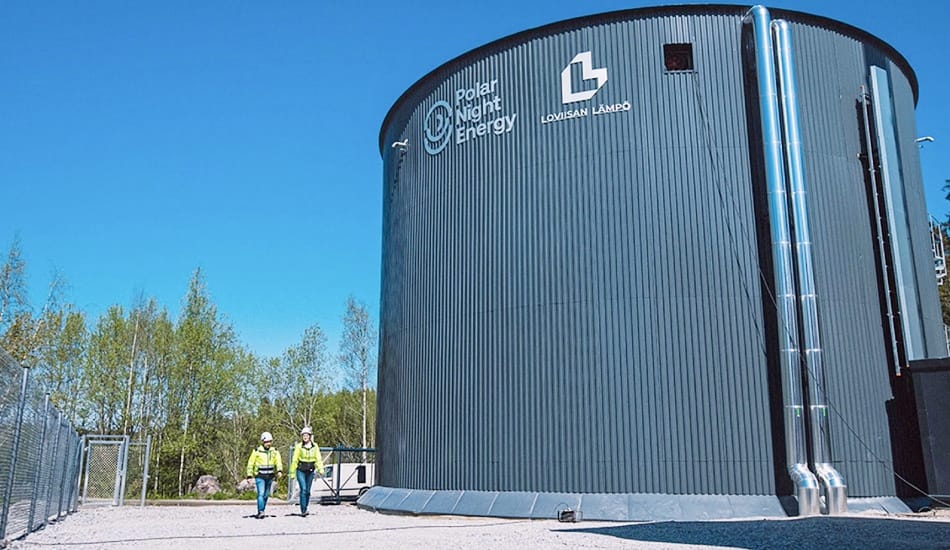
According to the developer Polar Night Energy, the system has fully met its design specifications, reduced carbon dioxide emissions in the district heating system by approximately 70%, and demonstrated higher efficiency.
In Brief
· The world's largest sand battery has successfully completed its first year of operation.
· The system reduced CO₂ emissions in the city's heating supply by approximately 70%.
· There were no disruptions in heat supply during the entire operating period.
· The storage unit allows for using the cheapest hours of electricity generation and storing heat from several days to several weeks.
· The developers consider the technology promising not only for public utilities but also for industry.
How the Sand Battery Works
Despite its name, the installation does not generate electricity. It serves as a thermal storage unit that stores excess electrical energy in the form of heat.
During periods of low electricity prices, primarily from wind and solar power plants, a special system heats a heat transfer medium, transferring energy to the battery's filler — approximately 2,000 tons of crushed talc-chlorite (soapstone). This material can maintain a temperature of several hundred degrees for a long time and then gradually release the stored heat into the district heating system.
Results Exceeded Expectations
According to Polar Night Energy, the first year of operation was more successful than anticipated.
In addition to meeting design targets, the battery ensured uninterrupted operation of the heating system without a single outage. At the same time, the operator managed to purchase electricity for charging the storage unit during hours of minimum prices — on average 70–80% cheaper than the market average, and in some months, the savings exceeded 90%.
The experience gained confirmed that the technology can not only reduce greenhouse gas emissions but also lower operating costs.
Why This Matters
The main problem with renewable energy is the uneven generation of electricity. Wind and sun often produce energy when demand is low.
The sand battery allows this excess energy to be stored and used later — for example, at night, on frosty days, or during peak consumption periods. This reduces the need to use gas, coal, or fuel oil for heating.
The developers believe that similar systems can be used not only for urban heating but also in industry, where large volumes of high-temperature heat are required.
What This Means for Kazakhstan
For Kazakhstan, such technologies are of interest primarily in the context of developing renewable energy. As the share of solar and wind power plants grows, the task of energy storage and smoothing out generation unevenness becomes increasingly relevant.
Previously, Hunn.kz reported on iron-air batteries capable of storing electricity for several days. Sand batteries offer a different approach: instead of storing electricity, they accumulate heat, which is especially in demand in countries with long heating seasons.
For the northern regions of Kazakhstan, such solutions could potentially become one of the ways to improve the efficiency of district heating systems and reduce fossil fuel consumption.
Author's Conclusion
The successful operation of the world's largest sand battery shows that the energy transition depends not only on building new solar and wind power plants but also on the emergence of efficient energy storage systems. While attention was previously focused primarily on lithium batteries, today technologies using simple and accessible materials — sand, stone, or iron — are becoming increasingly important. It is precisely such solutions that can make renewable energy not only environmentally friendly but also economically sustainable.
Comments ()