Soil Protection Act takes effect — what landowners are now required to do
Kazakhstan's Soil Protection Law takes effect. Fines for violations are introduced.
At the end of June, we reported that the Senate had approved the Law "On Soil Protection" with a mandatory land passport. Just over two months later, the document has moved from the "adopted" stage to the "in force" stage: starting September 8, 2026, the law's requirements are mandatory, and specific fines — up to and including criminal liability — have already been established for their violation.
The gist in brief
- Starting September 8, 2026, the Law "On Soil Protection" comes into force in Kazakhstan, establishing mandatory requirements for owners and users of land plots during construction and other works that disturb the soil cover.
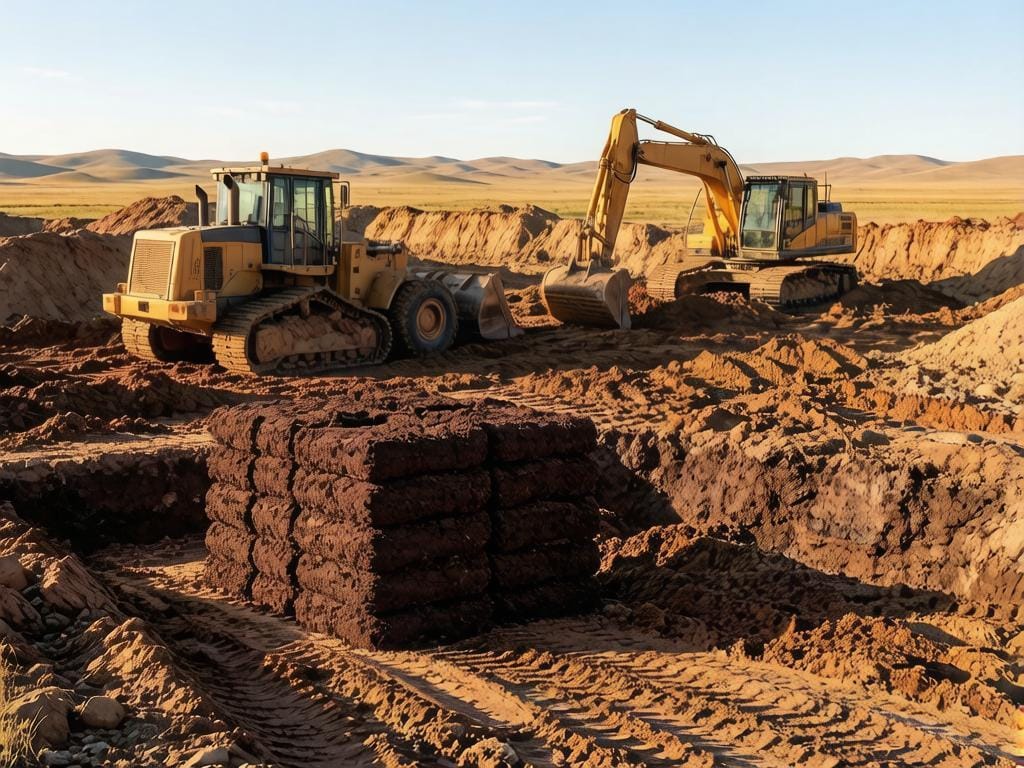
- The key requirement is the timely removal, preservation, and subsequent targeted use of the fertile soil layer before construction or other non-agricultural works begin; exporting the removed soil outside Kazakhstan is prohibited.
- Failure to fulfill land protection obligations entails administrative liability: for individuals — a warning or a fine of 5 MCI (21,625 tenge in 2026), for small businesses — 10 MCI, for medium-sized businesses — 20 MCI, for large businesses — 50 MCI; a repeated violation within a year doubles the fine.
- For the illegal removal of the fertile layer under Article 337 of the Administrative Code, fines for individuals start at 40 MCI, and for subsoil users causing major damage, criminal liability may apply, up to and including imprisonment.
What exactly land owners are now required to do
The law introduces the concept of the fertile layer as the upper part of the soil that possesses properties necessary for plant growth and development — and requires that this layer not be irreversibly lost beneath a building's foundation or asphalt paving. Plot owners are now obliged to carry out measures to protect land from depletion, desertification, erosion, and pollution, and, where land has been disturbed, to recultivate it and restore fertility. If a plot is used as arable land or pasture and the fertile layer remains in place, the owner must take measures to preserve fertility and prevent soil degradation — meaning the law applies not only to developers but also to ordinary agricultural land users.
Where to put the removed soil
A separate and rather strict part of the regulation concerns the fate of the removed fertile layer itself. It cannot be used at one's own discretion: the law stipulates that removed soil may only be used for recultivation of disturbed lands, improvement of agricultural and low-productivity lands, restoration of degraded soils, as well as greening and landscaping of populated areas. Exporting such soil outside Kazakhstan is expressly prohibited. Subsoil users and organizations performing construction works have separate obligations — to remove the fertile layer before work begins and to ensure its storage under conditions in which the soil does not lose its qualities.
The cost of violation
The scale of sanctions is clearly differentiated by the size of the violator. For individuals, the basic penalty is a warning or a fine of 21,625 tenge; for small businesses and non-profit organizations — twice as much; for medium-sized businesses — four times as much; for large businesses — ten times the base rate. A repeated violation within a year automatically doubles the fine amount. However, the most serious liability is provided for the illegal removal of the fertile layer: under Article 337 of the Administrative Code, fines for individuals start at 40 MCI, and for subsoil users whose actions caused major damage, the law allows criminal prosecution up to and including imprisonment — meaning the state treats such violations not as a minor administrative oversight but as a potentially serious environmental crime.
Author's conclusion
The difference between "the law has been adopted" and "the law has come into force" is quite tangible in this case: only now has it become fully clear exactly how much disturbing the soil cover will cost — from a warning for an ordinary owner of a garden plot to criminal liability for a subsoil user who caused major damage. In the coming months, the test of the law will be not the text of the document itself, but the practice of its enforcement — how consistently local authorities will require the removal and preservation of the fertile layer at real construction sites, rather than only on paper.

Comments ()