Solar bonds" could make home panels more affordable without a loan
Home solar could cover nearly half of Europe's electricity use, yet most households face the same hurdle—high installation costs requiring savings or credit.
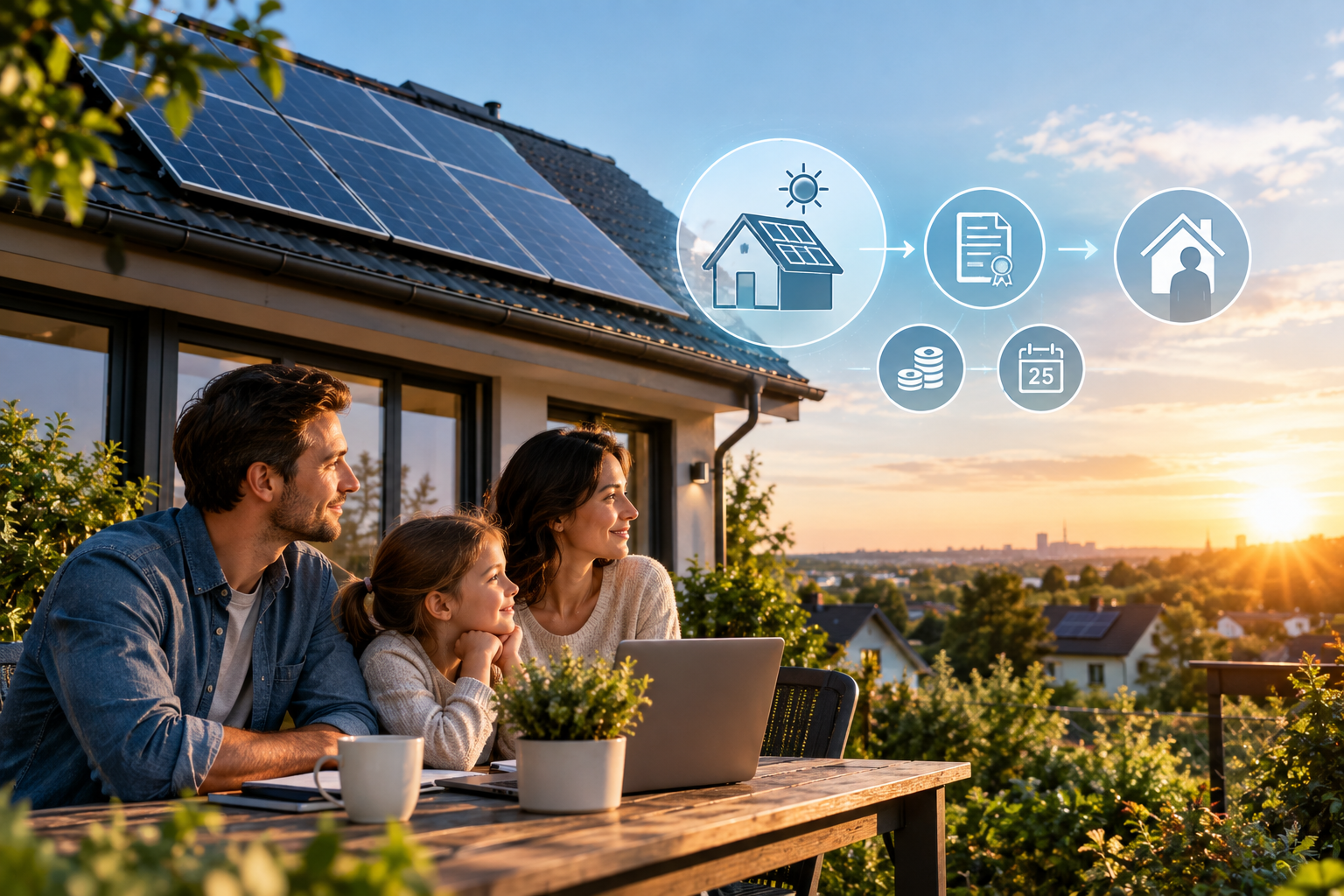
British researchers have proposed a financial scheme that promises to bypass this problem without bank interest, Euronews reports.
The gist
- According to an analysis in the journal Nature Energy, rooftops with solar panels could supply about 40% of Europe's electricity by 2050, but panels are currently installed on only about 10% of roofs — the main barrier remains the high installation cost of €7,000–30,000 for a typical home.
- Researchers at the Oxford Institute for Environmental Change propose a "solar bond" scheme: government-backed financing without credit checks, tied to the property itself rather than the owner — when the house is sold, payment obligations transfer to the new resident along with the panels.
- Costs would be repaid over 25 years through electricity bills; calculations show such a scheme would save at least €96 per year, and almost twice as much with a battery.
- Scaling up such a program in the UK could create more than 42,000 new jobs by 2030, according to an estimate by the Solar Trade Association.
The high-cost barrier
The price range for installing solar panels is wide: a typical European home requires 6 to 15 kW of peak capacity depending on family size, heat pump use, and electric vehicle ownership, costing €7,000–30,000. In the UK, a 4.5 kW system costs around €8,800. At the same time, according to the UK's Energy Savings Trust, a typical household needs at least 10 years to recoup this investment — and the upfront amount itself often forces people to take out a loan and pay interest, making the switch to solar energy less beneficial precisely for budget-constrained families who need such savings the most.
How solar bonds work
The idea, set out in the think tank Common Wealth's report "The Right to Sun," changes the very logic of financing: instead of a personal loan dependent on an individual's credit history, the scheme proposes bonds tied to the property itself. This is a fundamentally important difference — if the owner sells the house, payment obligations do not remain with them but transfer along with the panels to the next resident, who continues paying off the remaining amount through electricity bills over a 25-year term. This structure removes one of the main psychological barriers for homeowners who are unsure they will stay in the house long enough to recoup their investment.
Similar logic in other countries
The idea of making home solar energy accessible without large upfront costs is already being implemented in various forms around the world. We have previously reported that Uzbekistan runs the "Solar House" program, which paid residents 330.82 billion soums in subsidies for generation from home solar installations in the first half of 2026 — 9 times more than a year earlier. Kazakhstan is still noticeably lagging in this particular segment: the country is betting on large industrial renewable energy projects, while the mechanism for distributed home generation remains extremely limited in scope. The idea of bonds tied to property rather than to the creditworthiness of an individual household could become an interesting reference point for expanding precisely this direction — especially since Kazakhstan's steppe regions have some of the highest solar irradiation levels in the world.
Author's conclusion
The concept of solar bonds addresses not a technical but a financial problem of the energy transition — the fact that solar panels are physically capable of paying for themselves and delivering savings has long been beyond doubt, but it is precisely the entry barrier of a large upfront sum that has for years kept mass consumers from switching to their own generation. If such a scheme truly takes off on a scale comparable to the Nature Energy forecast, the difference between countries with developed and underdeveloped home solar energy could be determined not so much by solar radiation levels as by the availability of a suitable financial instrument for ordinary households. It is worth remembering, however, the flip side of rapid scaling: Portugal's largest solar plant went bankrupt precisely because of an oversupply of solar energy on the market, which collapsed wholesale prices — the mass growth of home generation will also require the parallel development of grids and storage, not just affordable financing.
Comments ()