Spain turns former energy weakness into national project
For decades, the country relied on imported oil and gas—a classic economic vulnerability. Now it is trying to turn that weakness into a competitive advantage.
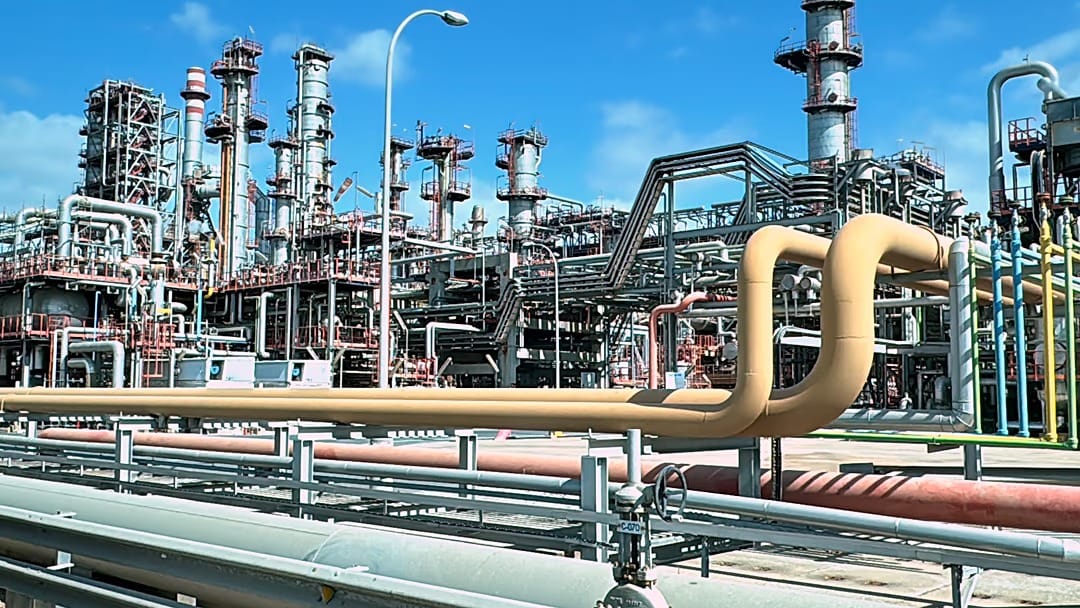
Spain has no fossil fuel reserves of its own, but it has an abundance of sun, wind, and space for building large renewable power plants.
The gist in brief
- Spain is betting on green hydrogen production — an energy carrier obtained by electrolysis of water using renewable electricity — aiming to become Europe's largest producer of this fuel.
- Moeve (formerly Cepsa) has begun construction in Huelva province of the first phase of the "Andalusian Green Hydrogen Valley" — a project worth over €1 billion with an initial electrolysis capacity of 300 MW and projected annual output of about 45,000 tonnes of hydrogen.
- The Spanish government has called the initiative "a true national project" and allocated over €3 billion for more than 120 renewable hydrogen projects; by 2030 the country intends to bring total electrolysis capacity to 12 GW.
- Electricity accounts for about 70% of the cost of green hydrogen — which is precisely why the Iberian Peninsula's cheap renewable generation, according to the industry, gives Spain a structural price advantage over most other European countries.
Why is hydrogen even needed if renewable electricity already exists
A key nuance that is often lost in discussions about hydrogen energy: where renewable electricity can be used directly, it is almost always more efficient than first converting it into hydrogen and then back into energy. Hydrogen's main potential is tied to sectors where a direct switch to electricity is technically difficult — certain heavy industry processes, chemical production, some segments of maritime and air transport, as well as the use of hydrogen as a feedstock for producing ammonia and synthetic fuels.
Huelva as a testing ground for a national bet
Moeve CEO Maarten Wetselaar states the company's logic bluntly: "It can and will become the leading producer of green hydrogen in Europe."
The choice of Huelva specifically for the first major project is no accident — in addition to rich renewable resources, the region already has industrial activity, port infrastructure, and potential hydrogen consumers in relative proximity to the production site. The company's ultimate ambitious goal is to bring the entire "Andalusian Green Hydrogen Valley" project to 2 GW of capacity, connecting Huelva with other industrial regions of Europe via pipelines or sea routes.
Economics remains the main risk for now
Green hydrogen production is still typically more expensive than conventional hydrogen from fossil fuels, although the difference depends on gas prices, electricity costs, and emissions taxes in a given country. The industry's bet is built on the same principle that has already worked for solar and wind energy — scaling up production should reduce the cost of electrolyzers and related infrastructure enough for the cost curves of conventional and green hydrogen to intersect. But this requires large projects right now, and to finance them, investors need confidence that there will be enough buyers for the finished hydrogen — confidence that currently rests more on forecasts than on confirmed demand.
Safety as a condition for scaling
The transition to industrial hydrogen production also raises safety issues — the gas is highly flammable, and due to the extremely small size of its molecules, it requires special attention to the leak-tightness of equipment and pipelines.
Maria Olavarria, head of the production department at Moeve's "La Rabida" Energy Park, explained the company's approach: "We understand that the development of renewable hydrogen must be accompanied by the highest level of safety."
According to her, priority is given specifically to preventing leaks, not just detecting them after the fact, and new facilities are designed with multiple independent layers of protection.
Connection to the Kazakh context
The structural argument made by the Spanish industry — that the competitiveness of green hydrogen is determined primarily by the cheapness of renewable electricity — applies directly to Kazakhstan as well. We have already written that a Kazakh expert from KАЭС LLP called hydrogen production one of the promising applications of nuclear reactor energy alongside electricity and heat supply; a similar logic works for renewable sources as well — a country simultaneously expanding wind and solar capacity such as Masdar's wind farm in Zhambyl region possesses a similar combination of cheap wind, sun, and open space that the Spanish industry is betting on.
Prime Minister of Spain Pedro Sanchez directly articulated the essence of such national bets: "It is also about seizing a huge industrial opportunity."
Author's conclusion
The construction of "Onuba" shows that Spanish green hydrogen is moving from loud announcements to real construction sites, but the most difficult stage — proving the ability to operate at industrial scale at a competitive price — is only just beginning. For now, the share of renewable hydrogen in the global energy balance remains vanishingly small, and its further growth requires a manifold increase in renewable generation itself, without which there is simply nowhere to get the feedstock for hydrogen. For countries with a similar surplus of sun and wind, including Kazakhstan, the Spanish experience is worth watching closely — not as a ready-made recipe, but as a live experiment that will show whether the structural advantage of cheap renewable energy pays off in real, not just theoretical, competitiveness.
Comments ()