Tajikistan temporarily abolishes duty on fuel from countries outside free trade zone
Tajikistan's government has temporarily zeroed import customs duties on petroleum products and petroleum gases from countries outside the free trade zone agreement until December 31, 2026.
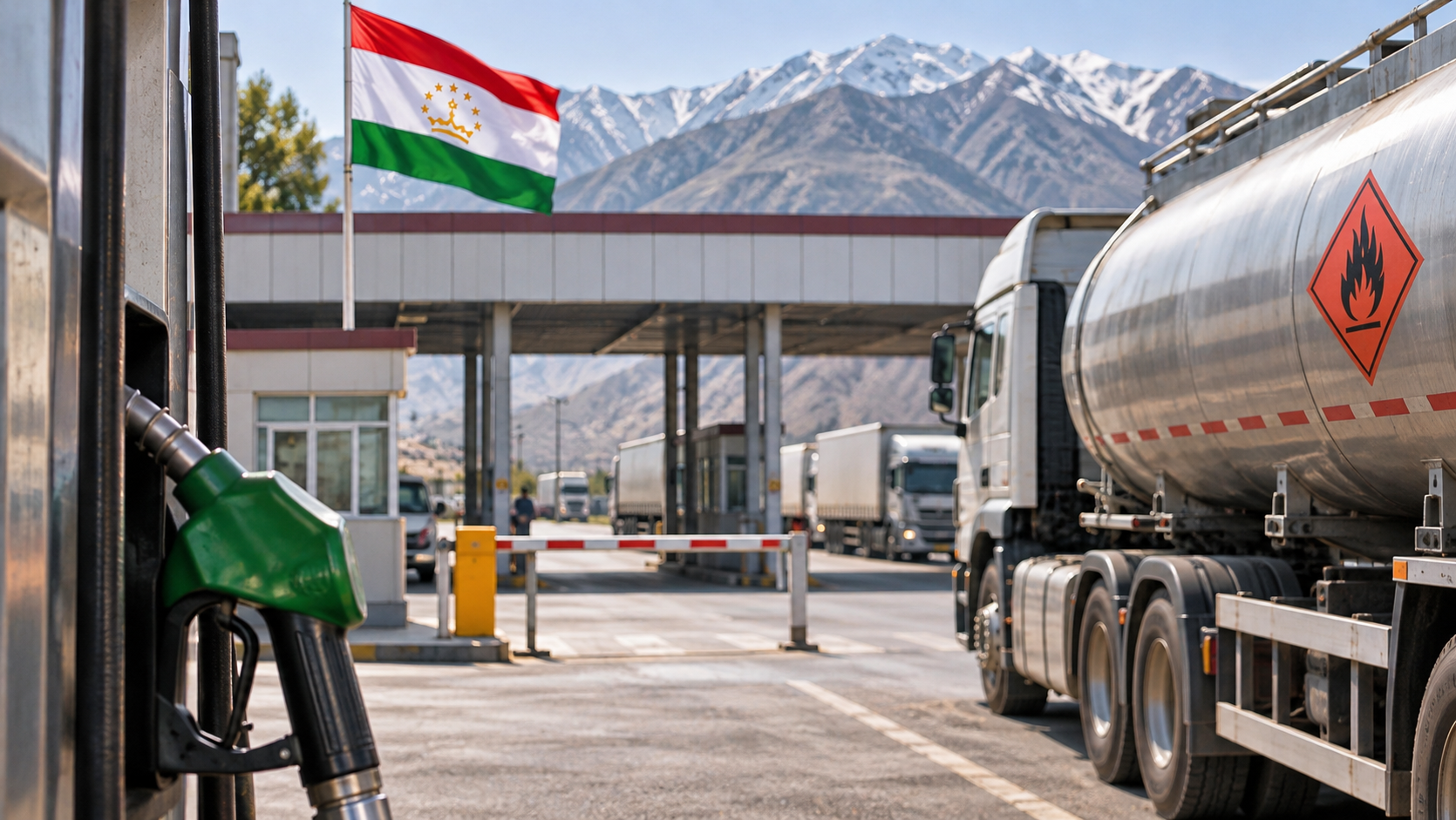
Supplies from member countries, including Russia and Kazakhstan, were already imported duty-free, so the outcome depends on how much fuel is purchased from other countries, writes Asia-Plus.
The essence in brief
- The zero duty on petroleum products and petroleum gases from countries outside the free trade zone is in effect until December 31, 2026.
- Government resolution No. 744 was adopted on November 10 and is in effect from the moment of adoption.
- The list includes commodity codes 2710 and 2711; crude oil is not included.
- In the first half of 2026, Russia accounted for 91.1% of Tajikistan's petroleum product imports, and Kazakhstan for 1%.
What the government decided
Resolution No. 744 of November 10, 2026 supplements government resolution No. 470 of August 28, 2024, "On the rates of import customs duties of the Republic of Tajikistan." A note was added to its annex: for goods with codes 2710 and 2711 from states that are not parties to the Free Trade Zone Agreement, a zero import duty rate applies until December 31, 2026. The document was published on November 13 and enters into force from the moment of adoption.
Code 2710 covers petroleum products, including gasoline and diesel; code 2711 covers petroleum gases, including liquefied gas. Crude oil falls under code 2709, and the exemption does not apply to it.
Where Tajikistan gets its fuel
The country is heavily dependent on petroleum product imports. In the first half of 2026, it imported 599,500 tonnes worth $494.7 million. Russia supplied 91.1%, Belarus 2.8%, Turkmenistan 1.9%, Kazakhstan 1%, Uzbekistan and Kyrgyzstan 0.9% each, and other countries 1.5%.
Russia, Kazakhstan and Tajikistan are parties to the free trade zone agreement of October 18, 2011, and goods from member countries complying with rules of origin were already imported duty-free. Countries outside the agreement include, for example, Iran, Turkmenistan and Azerbaijan. Since late August, Iran has been supplying petroleum products to Tajikistan: the country requested 2.55 million tonnes per year from it, including crude oil, diesel, gasoline and aviation fuel.
Will fuel become cheaper
In the summer, fuel in Tajikistan rose sharply in price: AI-92 gasoline went up from 10.90 to 13.50 somoni per liter, diesel from 11 to 16.50 somoni, and some filling stations experienced diesel shortages. Currently, average prices at filling stations are 17 somoni per liter for AI-95, 16.20 for AI-93, 16.60 for diesel and 7.10 for liquefied gas, while AI-92 is not available for sale.
There is no reason to expect automatic price reductions. A significant portion of fuel comes from Russia, and there was no duty on it anyway. If purchase volumes from countries outside the agreement remain small, the impact on prices will be limited. Moreover, the price at the filling station is made up of the purchase cost, transportation, transit, insurance, exchange rates and other importer expenses.
Author's conclusion
The decision expands Tajikistan's choice of suppliers after the summer disruptions: Iran, Turkmenistan and Azerbaijan can now sell fuel duty-free. But it is only in effect until the end of the year, so a noticeable effect will appear only if importers manage to conclude real deals with new suppliers before the end of the year. Nothing changes for Kazakh fuel: it was already imported duty-free.
Comments ()