Tengiz found itself in the same crosshairs as Kashagan
Atyrau region's ecology department accused Tengiz, Kazakhstan's largest oil field operator, of accumulating waste without proper permits.
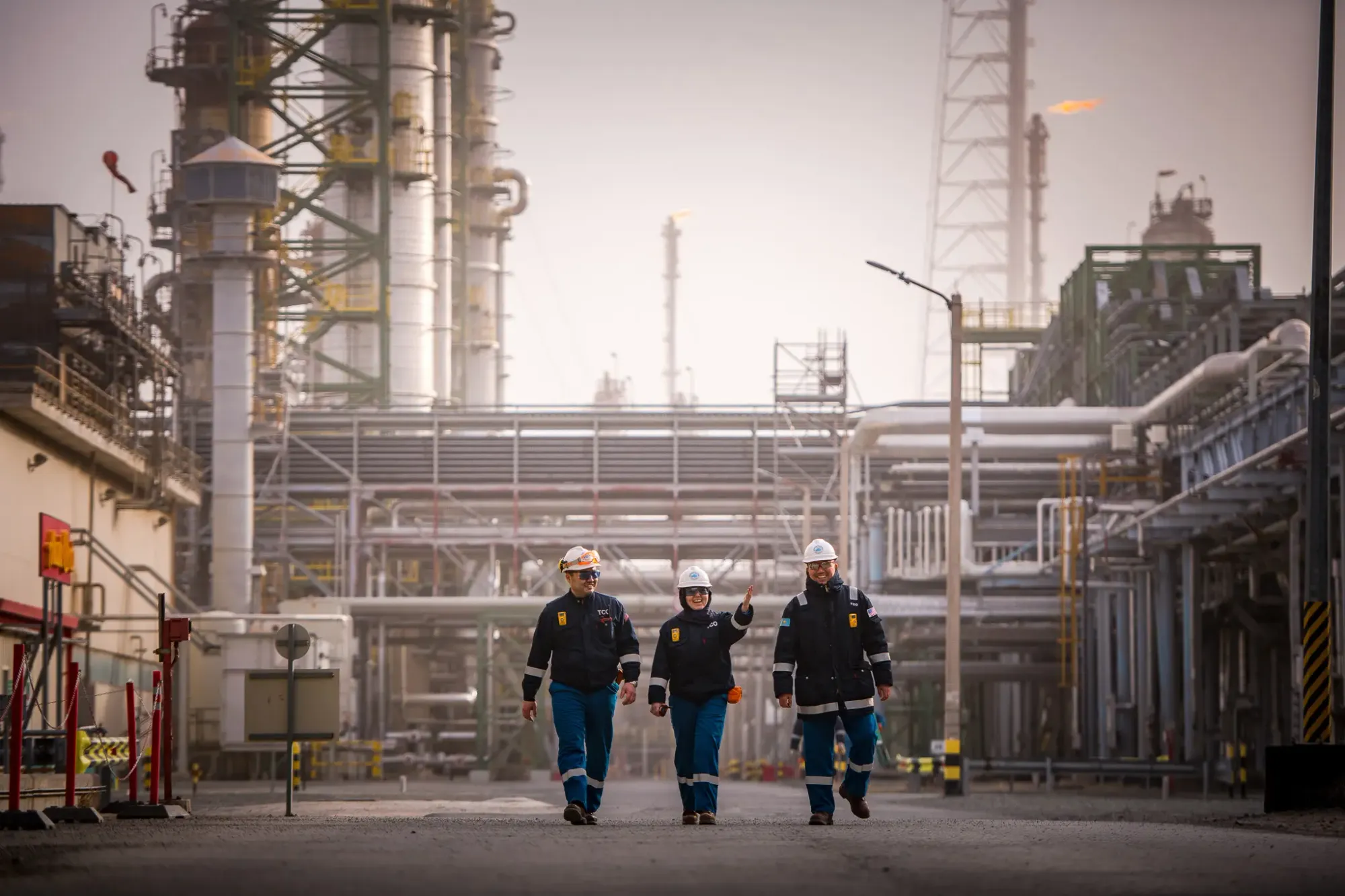
This is not the same conflict that has been unfolding around Kashagan for almost a month — Tengiz operates under a different consortium — but in terms of the nature of the claims and the composition of international partners, the story already looks familiar.
The gist in brief
- An unscheduled inspection of Tengizchevroil in July 2026 revealed waste accumulation at the field without an environmental permit establishing limits for such accumulation.
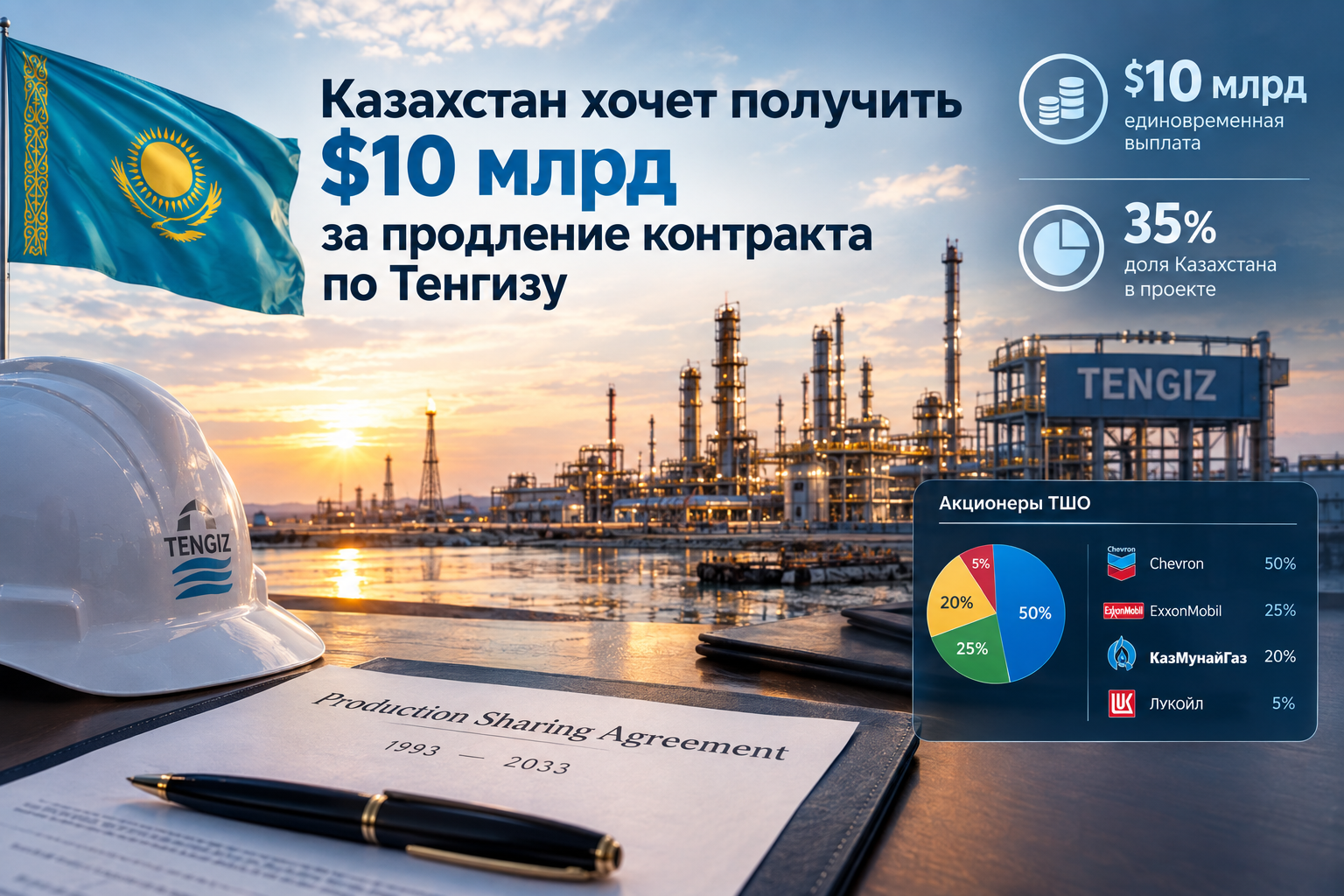
- The operator of the Tengiz field is Tengizchevroil, where Chevron owns 50%, ExxonMobil — 25%, KazMunayGas — 20%, and LUKOIL — 5%.
- Tengiz remains Kazakhstan's largest oil field with production of about 960 thousand barrels per day.
- The claim against Tengiz came amid an ongoing dispute over Kashagan, where the operator NCOC's property has already been seized in a case over a fine for sulfur storage.
What was found at Tengiz
As Bloomberg reports, according to the Ministry of Ecology and Natural Resources, an unscheduled inspection of the Tengizchevroil project, conducted by the Atyrau region ecology department in July, "revealed waste accumulation without an environmental permit providing accumulation limits." The agency's wording is fairly narrow — it concerns a procedural violation related to the absence of a current permit document, rather than a spill or other incident with a direct environmental impact. Bloomberg does not yet have a comment from the company itself on the substance of the claim.
Tengiz is not Kashagan, but a similar alignment of forces
It is important not to confuse these two assets: Tengiz and Kashagan are different fields with different operators and different compositions of international partners. Tengiz is managed by Tengizchevroil, where Chevron holds a controlling 50% stake, while Kashagan is managed by North Caspian Operating Company, a consortium of seven participants including KazMunayGas, Eni, Shell, TotalEnergies, ExxonMobil, Inpex, and CNPC. Chevron does not participate directly in the Kashagan consortium, so the claim against Tengiz is a separate storyline, not a continuation of the same story. But the timing coincidence is telling: Kazakhstan's two largest oil projects involving international majors have simultaneously come under close scrutiny from Kazakh environmental regulators.
An already familiar storyline for Kazakh authorities
Over recent months, Kazakhstan has consistently escalated pressure on foreign operators of oil projects on environmental grounds — not only through fines but also through enforced collection. In the Kashagan case, the matter has already progressed to concrete steps: seizure of the operator's property, attempts at enforced collection, warnings of possible criminal prosecution — we have written about all of this previously. The claim against Tengiz is still far from that scale and concerns a narrower procedural violation, but it fits into the overall trend — Kazakh regulators are increasingly scrutinizing the environmental documentation of the country's largest oil projects, regardless of who exactly serves as operator.
Author's conclusion
It is too early to conclude whether the claim against Tengiz will turn into something resembling the Kashagan standoff — the wording of the violation itself looks far less dramatic than the dispute over 2.3 trillion tenge surrounding sulfur. But for international operators of Kazakh oil projects, the signal is clear: the period when the country's environmental regulators reviewed documentation formally and without consequences appears to be over. Companies operating in Kazakhstan should keep their permit documentation in order — Tengiz shows that inspections are not limited to a single problem asset.

Comments ()