Tokayev: Kazakhstan will become a leading agro-industrial hub in Central Asia
Kazakh President Tokayev, meeting with Chinese tech leaders in Shanghai, set a strategic goal: making Kazakhstan Central Asia’s leading agro-industrial hub.
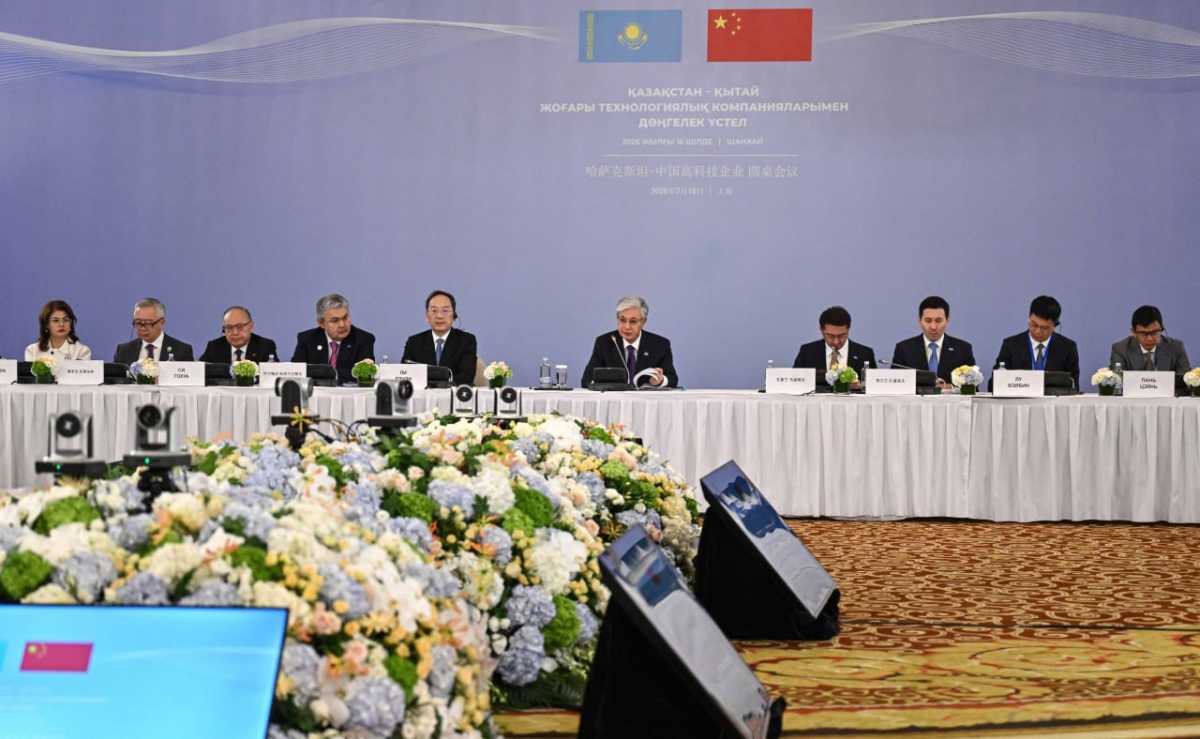
Tools — artificial intelligence, robotics, and Industry 4.0 technologies. The partner for implementation is China, which has both the technology and capital, as well as an appetite for Kazakh agricultural products.
The Gist
- President Tokayev articulated a direct goal: "We intend to develop Kazakhstan as a leading agro-industrial hub in Central Asia."
- For the second consecutive year, Kazakhstan is harvesting 27 million tons of grain — a record achieved in part through precision farming technologies, drones, and satellite monitoring.
- Over 200 enterprises in the country operate on the "smart farm" principle, with another 650 farms gradually implementing digital solutions.
- A national system for digital traceability of products from field to consumer is being developed.
- Chinese companies have been invited to participate in projects involving AI, robotics, automated production lines, logistics centers, and cold storage facilities.
Key Statement
As reported by Kapital.kz, Kassym-Jomart Tokayev made a statement that became the focal point of the meeting:
"The shortest path to achieving this goal is the introduction of artificial intelligence, robotics, and Industry 4.0 technologies. Intelligent quality control systems, automated production lines, and digitally integrated supply chains increase labor productivity and enable operations in accordance with international standards."
This is not a general declaration about the importance of technology — it is a specific formula: an agro-hub is built not on land and climate, but on data, AI, and digital infrastructure. At the same time, the president emphasized that Kazakhstan is already moving in this direction, not just declaring intentions.
Basis for the Ambition
Behind the statement are real numbers. Two consecutive record harvests of 27 million tons are not a coincidence, but the result of the systematic implementation of technology. Over 200 enterprises are already operating as "smart farms" in the process of digitalization. Drones, satellite crop monitoring, and precision farming systems are no longer exotic — they are becoming the standard for competitive farms.
Add to this the developing system for digital traceability of products from field to consumer — without it, Kazakh food products will not be able to fully meet the requirements of the EU, China, and other premium markets, where supply chain transparency is becoming a mandatory condition.
What is Offered to China
The invitation is addressed to a specific partner — and this is no coincidence. China is Kazakhstan's largest trading partner in the agro-industrial complex and, at the same time, a global leader in key AgriTech areas: agricultural drones, AI-based irrigation systems, cold chain logistics, and automated production lines.
The president clearly outlined what the Kazakh side is interested in: intelligent quality control systems, automated processing lines, integrated digital supply chains, modern logistics centers, and automated cold storage facilities. This is not a general discussion about cooperation — it is a specific list of tasks for a specific partner.
The Hub is Not Just About Grain
A fundamental point in the president's statement is the emphasis on processing, not just production. Kazakhstan intends to sell not wheat, but high-value-added products. This directly aligns with a number of political decisions in recent months: export quotas on beef to stimulate domestic processing, preferential lending for the agro-industrial complex for capital investments in processing infrastructure, and the Law "On Soil Protection."
In Tokayev's understanding, an agro-hub is not just the largest grain producer in the region, but a full-fledged center for processing, storage, and export of finished food products.
Author's Conclusion
The statement about transforming Kazakhstan into a leading agro-industrial hub in Central Asia is not the first of its kind. But for the first time, it was made with such concrete details about the tools: AI, robotics, digital supply chains, and partnership with Chinese tech companies. Record harvests and a growing network of smart farms provide grounds to say that the ambition is not unfounded. Now the question is the speed of the transition from raw material production to value-added production. This is where Kazakhstan is still lagging behind its own declarations.
Comments ()