Turkish green steel producer invests €187 million in solar energy
Turkish steel giant Tosyalı secured €187 million to build two solar plants with a combined capacity of 261 MW.
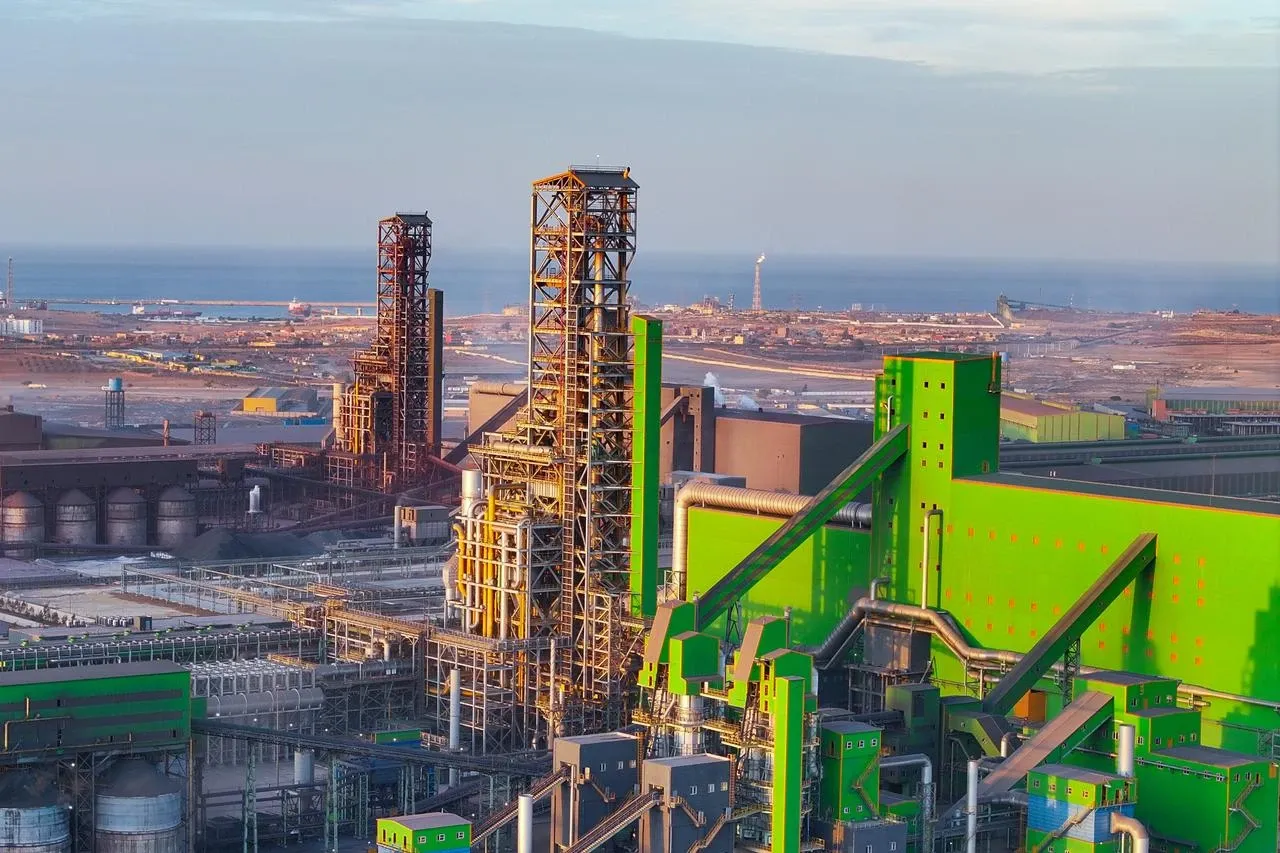
The project will be the first stage of a large-scale program under which the company intends to create its own generation capacity of 1.4 GW and almost completely cover its production needs with electricity from renewable sources, writes Türkiye Today.
In Brief
· Turkish company Tosyalı has received €187 million for the construction of two solar power plants.
· The financing was provided by the Spanish bank BBVA with support from the export agency Cesce.
· The new facilities in Osmaniye and Niğde will provide 261 MW of installed capacity.
· The project will be the first stage of a program to create 1.4 GW of its own solar generation.
· The company views the development of renewable energy as the foundation for producing "green" steel.
Course Towards Energy Independence
The financing is structured as an Export Finance Buyer Credit, supported by the Spanish export credit agency Cesce. The funds will be directed towards the construction of solar power plants in the provinces of Osmaniye and Niğde.
Equipment for the project will be supplied by GE Vernova Spain, and the general contractor will be Inogen. Once the facilities are commissioned, the installed capacity of the new solar plants will reach 261 MW.
First Stage of a 1.4 GW Program
The new power plants are just the beginning of Tosyalı's large-scale investment program.
The company already operates 235 MW of solar panels installed on the roofs of its own production facilities. After the full program is implemented, the total capacity of its own renewable generation will reach 1.4 GW, making the project one of the world's largest industrial complexes for self-supply of electricity.
Chairman of the Board Fuat Tosyalı emphasized that energy transformation is becoming a key factor in the competitiveness of the metallurgical industry.
According to him, investments in solar energy will allow the company not only to reduce its dependence on external electricity suppliers but also to strengthen its position in the global market for "green" steel.
Steel is Becoming Increasingly "Green"
The global metallurgical industry remains one of the most energy-intensive sectors. Steel production accounts for a significant share of global carbon dioxide emissions, prompting major manufacturers to actively invest in renewable energy, hydrogen technologies, and energy efficiency improvements.
For Tosyalı, its own solar generation is becoming part of a long-term strategy to decarbonize production and prepare for stricter environmental requirements in export markets, primarily in the European Union.
What This Means for Kazakhstan
For Kazakhstan, this project is of interest for two main reasons.
Firstly, the global metallurgical industry is gradually changing its approach to production, betting on its own renewable energy sources.
Secondly, requirements for the carbon footprint of industrial products are becoming an important factor in competitiveness in foreign markets.
Earlier, Hunn.kz reported on the signing of a memorandum between Kh. Dosmukhamedov Atyrau University and the Chinese company AIKO Solar regarding the creation of a demonstration project for Zero-Carbon Smart Agriculture, which is also based on the use of solar energy and digital technologies. This example shows that the development of large-scale renewable energy projects is becoming a common trend not only for metallurgy but also for agriculture.
Author's Conclusion
Until recently, solar power plants were seen as a way to reduce the environmental footprint of enterprises. Today, they are becoming a strategic asset, influencing production costs and companies' positions in the global market. The Tosyalı project demonstrates that the battle for competitiveness in industry is increasingly being fought not only on the factory floor but also at companies' own power generation facilities. For Kazakhstan, where metallurgy remains one of the key sectors of the economy, this experience could serve as a benchmark for implementing its own industrial decarbonization projects.
Comments ()