US allocates $5 million for Central Asia's cybersecurity
The money will go not directly to states but through a grant mechanism aimed at private companies and startups.
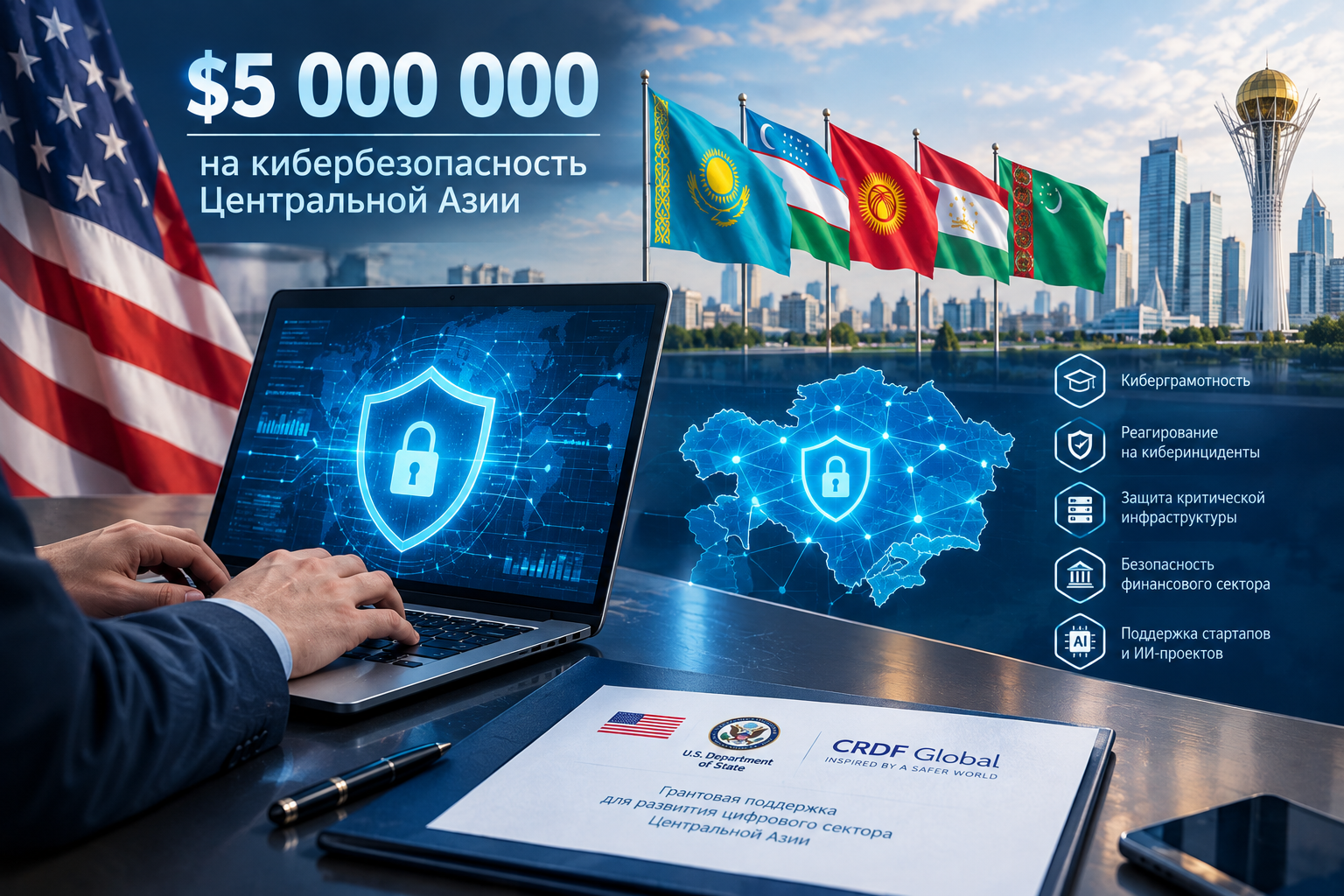
The announcement was made on the same platform in Astana where, a day earlier, another digital initiative for the region was discussed, KAZINFORM reports.
The gist in brief
- Acting Deputy Assistant Secretary of State for South and Central Asian Affairs Mark Cameron announced the allocation of $5 million in foreign assistance to support cybersecurity and the digital sector of Central Asia — the funds will be channeled through the American Civilian Research and Development Foundation (CRDF Global).
- The stated focus areas are improving cyber literacy, enhancing incident response, protecting critical infrastructure, strengthening the security of the financial sector, and developing cybersecurity policy.
- Funding will be provided in the form of grants to startups and projects in the field of artificial intelligence — according to Cameron, it is private companies that play a leading role in this area.
- The statement was made at the C5+1 SI conference in Astana.
What is known and what is not
The statement provides a general direction but no specifics. It is unknown how the $5 million will be distributed among the five countries of the region — equally or through individual applications, who will select projects on the ground, and what amounts specific startups will be able to receive. The timeline of the program is also not named. CRDF Global is a non-profit organization that has worked with U.S. State Department grants in Eurasia for decades, so the mechanism itself is not new, but the details of this particular initiative have not yet been disclosed.
Part of the same agenda as the day before
The statement was made in the same week and on the same C5+1 platform where, the day before, representatives of business and the expert community of Central Asia proposed their own project — a mechanism for digital interoperability of the five countries without a supranational regulator. There is no direct connection between the two initiatives in the report, but the context is shared: over several days in Astana, both a regional agreement on technical compatibility of digital systems and external financing for cybersecurity and startups in the same Central Asia were discussed simultaneously. It was also previously reported that the countries of the region plan to adopt a common Code of Ethics for the responsible use of artificial intelligence — that is, the digital agenda of the five countries in recent weeks has been taking shape along several tracks in parallel: technical interoperability, AI regulation, and now external financing for cybersecurity.
Author's conclusion
$5 million is a modest sum by the scale of an entire region with a population of over 80 million people, and its real effect will depend on the distribution details that have not yet been disclosed. But the very fact that several initiatives have appeared simultaneously — a regional interoperability project, discussions on AI ethics, and now an external grant for cybersecurity — shows that in recent weeks the digital agenda of Central Asia has ceased to be a topic of individual national programs and is increasingly being discussed in a regional format, with the participation of both the countries of the region themselves and external partners.

Comments ()