Uzbekistan attracts $15 billion for renewables amid preparations for second nuclear power plant
Saudi Acwa and South Korea's KOWEPO signed a memorandum to study renewable energy projects in Uzbekistan.
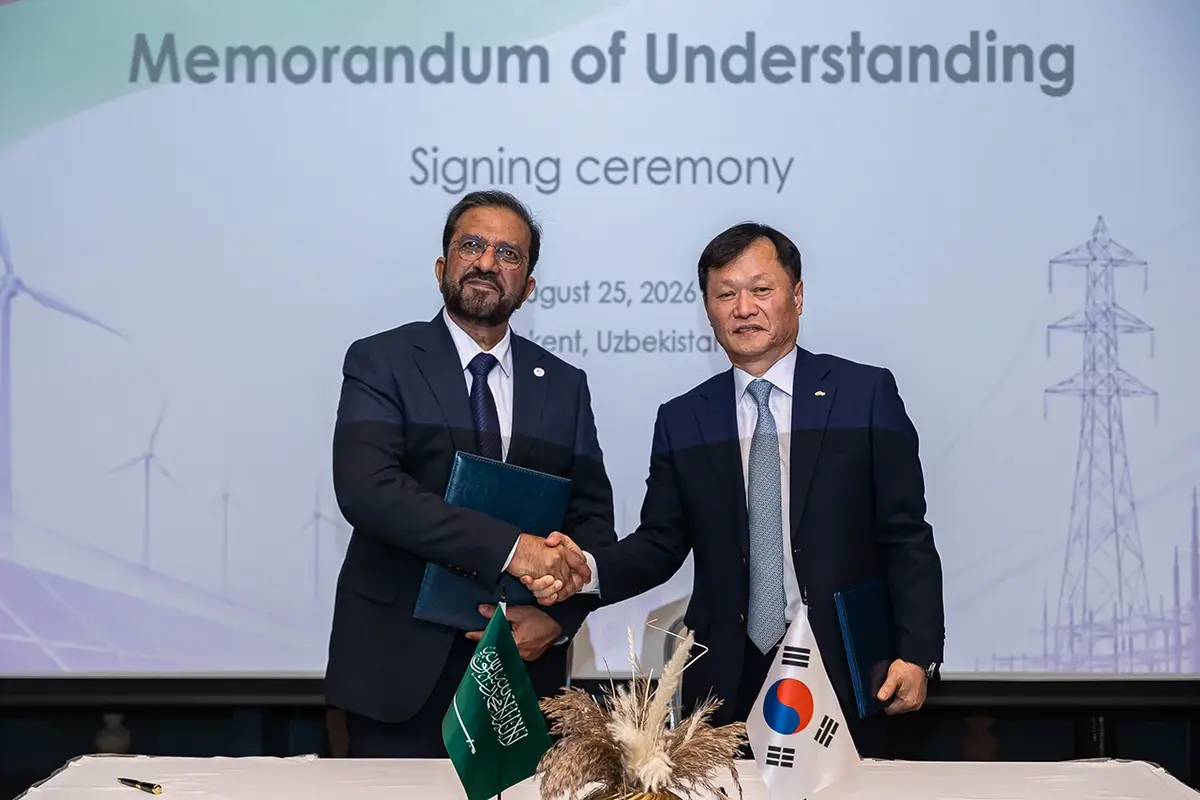
In and of itself, the news is routine, but it joins a series of other steps the country is taking almost simultaneously. A week earlier, Uzbekistan announced preparations for its second nuclear power plant, and now another major international player is joining the country's energy agenda.
The gist
- Saudi energy company Acwa and South Korea's Korea Western Power Co. (KOWEPO) have signed a memorandum of understanding to study renewable energy and energy storage projects in Uzbekistan; for KOWEPO, this is a step into the region after implementing 3.5 GW of renewables and 877 MW of combined-cycle gas turbine capacity in the Middle East.
- Acwa has been operating in Uzbekistan since 2019 — the country has become the company's second-largest market after Saudi Arabia itself: 19 projects with a total capacity of over 10 GW, with investments potentially reaching $15 billion, including wind, solar, energy storage, conventional generation, and green hydrogen.
- The agreement was signed a week after President Mirziyoyev announced the start of preparations for the country's second nuclear power plant — meaning Uzbekistan is simultaneously expanding both nuclear and renewable generation.
- The ongoing first NPP project in the Jizzakh region (VVER-1000 reactors and small RITM-200N units, totaling over 2.1 GW) is being implemented with Rosatom, and the country's electricity demand could double within the next 10 years.
Who are Acwa and KOWEPO
Acwa's President for Central Asia, Abid Malik, linked the agreement to the growing status of Uzbekistan's energy market: "This cooperation reflects the growing international confidence in Uzbekistan's energy sector and creates a platform for exploring opportunities in renewables and related infrastructure."
KOWEPO CEO Lee Jung-bok, in turn, outlined the South Korean company's goal — to apply in Uzbekistan the experience gained in the Middle East — and expects to leverage the partners' strengths when seeking new projects in the region. KOWEPO is a South Korean state-owned power company established in 2001 as a result of the country's power sector reform; for it, the memorandum with Acwa is a way to expand beyond the already developed Middle Eastern market.
Nuclear and renewables simultaneously
It is telling that the agreement with Acwa and KOWEPO came literally a week after Uzbekistan announced the start of preparations for its second nuclear power plant — even though construction of the first plant in the Jizzakh region with VVER-1000 reactors and small RITM-200N units has only just entered its active phase. President Mirziyoyev directly linked the development of nuclear energy to the country's investment attractiveness: according to him, potential investors are primarily interested in electricity prices and supply guarantees. Judging by the pace at which Uzbekistan is simultaneously expanding both nuclear and renewable generation, the country is not betting on a single source but is assembling a diversified energy portfolio across virtually all available directions at once.
Not just large-scale projects
The influx of major international investors like Acwa and KOWEPO is not the only area where Uzbekistan's renewable energy sector is growing. Alongside industrial renewable projects, distributed generation is also growing at a explosive pace: the "Solar House" program paid residents 330.82 billion soums in subsidies for the first half of 2026 — 9 times more than a year earlier, and the number of recipients grew 3.5-fold. This shows that the energy transition in Uzbekistan is happening on two levels at once — large international investments in industrial generation alongside parallel growth in private rooftop solar installations by households, stimulated by a simple and transparent feed-in tariff.
Why this matters for Kazakhstan
The synchronized growth of interest in Uzbekistan's energy sector — nuclear and renewable alike — is happening against the backdrop of similar, albeit less intense, dynamics in Kazakhstan itself. While Uzbekistan is attracting $15 billion from Acwa alone and simultaneously preparing a second NPP, Kazakhstan is building its own energy diversification more gradually — through the construction of a plant near Balkhash, expanding renewable capacity, and modernizing existing generation. Competition for international investment capital and technology partners between Central Asia's two largest economies is becoming increasingly tangible: the faster Uzbekistan demonstrates its readiness to attract diverse players like Saudi Arabia's Acwa and South Korea's KOWEPO, the higher the bar that Kazakhstani projects will also have to meet.
Author's conclusion
The memorandum between Acwa and KOWEPO is a routine document in its wording, which does not yet guarantee a single concrete project. But its significance lies elsewhere: it shows that Uzbekistan's energy market has matured enough to attract not just one major investor but an entire network of partnerships between players from different regions of the world, willing to pool capital and technology specifically for Uzbek projects. For regional neighbors, including Kazakhstan, this is a benchmark of how quickly international interest in one's own energy sector can be built up with consistent state policy.
Comments ()