WHAT IS WRONG WITH AGRICULTURE IN KAZAKHSTAN?
Problems and solutions for the deadlock in Kazakhstan's agro-industrial sector.
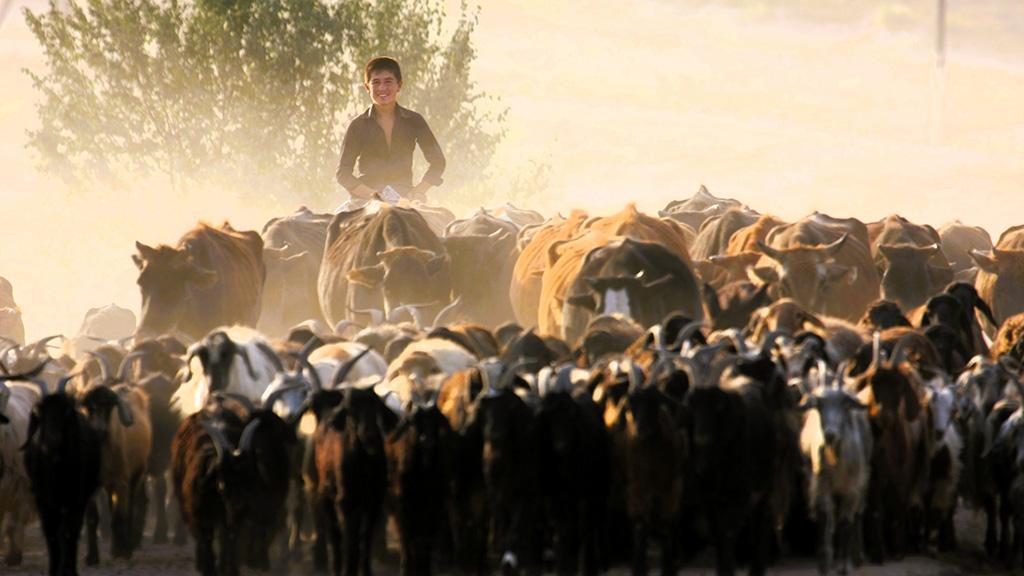
The ninth largest territory in the world, once home to the finest sheep skins on the continent and the tastiest meat. And now? You have to search hard to find domestic cheese on store shelves; natural milk isn't available in every city; in Atyrau, farmers refuse to slaughter infected livestock; and meat prices are rising out of proportion to incomes.
So, what's wrong with us?
Land Resources
We have a lot of land – nearly 215 million hectares, of which 80% were considered agricultural land. But the actual use of the land is a different story. Up to 40% of arable land is either degraded or used inefficiently. The Aktobe region has degraded enormously – from a former livestock zone, it is turning into a desert. Latifundists, export bans, pasture leases, and other "brilliant solutions" have led to a situation where the land seems to be occupied but does not work for the economy. In reality, for a long time, it was either an elite economy or a dog in the manger situation.
Plus, grain monoculture (mainly wheat) is an interesting case of marking time. Crop rotation is minimal, organic farming is just talk, and technology adoption is the prerogative of large holdings (all two of them, especially the "fraternal" ones), to which the state still gives subsidies, even if they operate at a 19th-century level.
Water Resources
This is even more interesting. Water has always been scarce in Kazakhstan, and now it is turning into a crisis zone. Why?
Firstly, neighbors are putting pressure: China is taking and will continue to take more and more water from the Ili and Irtysh rivers. Uzbekistan and Turkmenistan are drinking the Syr Darya as if it will be banned tomorrow. Afghanistan built the Qosh Tepa canal (mmm, if only someone had warned us) and took 30% of the Amu Darya's flow, forcing Uzbekistan and Tajikistan to significantly restructure their water usage, which ultimately negatively affects us.
But this is trivial compared to our extremely inefficient water use. Our own water losses reach 40-60% of the flow – such a volume is lost through the holes of the still Soviet-era irrigation systems, where canals are falling apart and irrigation systems are stuck somewhere in the era of the young Nazarbayev.
And let's not forget about global warming – glaciers are melting, river flows are decreasing, and the steppe is becoming even drier. 2024 doesn't count, but 2025 will show this trend.
What's the bottom line on water? In the southern regions, water is becoming a subject of corruption (buying water for the fields is normal practice; if you don't buy it, you don't irrigate). In the northern regions, drought is hitting crop yields, while we have a dismissive attitude towards steppe lakes – draining Taldykol and not using natural reserves in agriculture. Meanwhile, the country remains hostage to old Soviet solutions. And instead of investing in real digitalization of water accounting and honest analytics, officials are either muddying the waters or doing their utmost to keep everyone away from the flows.
By my estimates, the corrupt water market has exceeded 20 billion tenge. Do you think this is government money? Like hell it is. The farmer will factor all this into the price, and you will pay it personally from your wallet. And in the end, SMEs are to blame – let's raise the rate and lower the VAT threshold.
Agricultural Science and Technology
This is a complete genre crisis.
Science exists on paper – institutes exist, dissertations are written, experiments are conducted, new varieties are developed, but it's all only on paper.
As a result, the majority of farmers work using grandfather's methods, importing seeds, importing fertilizers. And technologies are adopted either "second-hand" from Western companies or through government programs that only "insiders" can access.
There is no genetic engineering, almost no precision agriculture, veterinary science is degrading, and agronomists capable of implementing new methods can be counted on one hand.
52 new varieties of potatoes were developed, not a single one of which is used.
Over 360 new varieties of grain were developed, but for some reason, we are only 20% self-sufficient in grain seeds. And that is the highest rate. For example, for greenhouse vegetables, our seed supply is around 0%. Oilseeds, legumes – look for our seeds; if you're lucky, at least let us get a glimpse.
For now, one thing is clear: Kazakhstan's agriculture is neither a catastrophe nor a leader. The potential is enormous: the country could become Asia's breadbasket, regain its status as a meat power, and even carve out a niche in exporting eco-friendly products. But due to weak governance, corrupt land and water schemes, and the stagnation of science, these are currently just unrealized opportunities.
If the approach doesn't change, in about 10 years we will be importing even our own flour, processed in Uzbekistan. By the way, in the far southern countries (and even in Turkey itself), entire milling clusters have emerged thanks to our subsidies and using our money.
To be continued – we will analyze each area separately.
Comments ()