Why Australia can't abandon a toxic herbicide banned in dozens of countries
While more countries ban one of the world's most toxic herbicides, paraquat, Australia has decided to keep using it in agriculture.
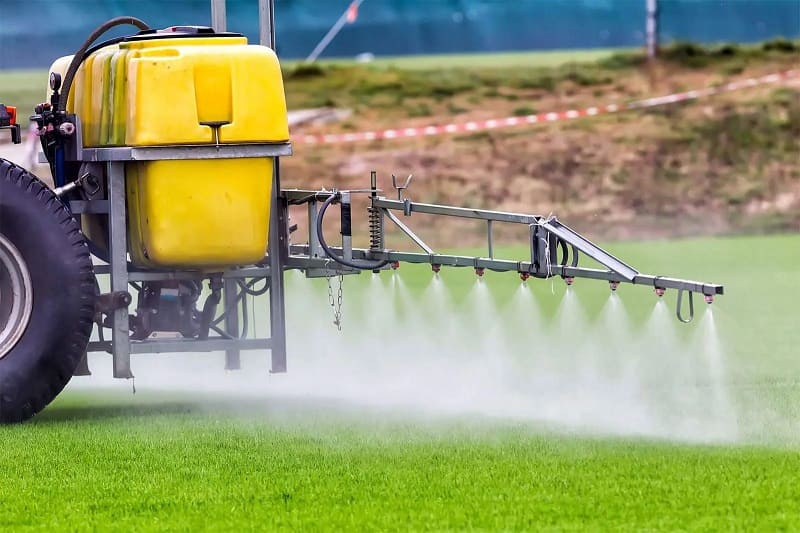
After nearly 30 years of review, the national regulator has allowed the continued use of the substance, although it has introduced stricter restrictions. As The Conversation magazine writes, the decision has reignited the debate among farmers, doctors, and environmentalists: can we abandon a product considered a vital tool of modern agriculture, but which is also linked to the development of Parkinson's disease?
The Gist
· Australia has maintained approval for the use of the herbicide paraquat after nearly a 30-year review.
· Paraquat is banned in more than 70 countries, including EU member states and China, but remains in demand in several major agricultural powers.
· Scientists note that it was the development of No-Till farming technology that made Australian agriculture dependent on this product.
· Opponents of the herbicide point to numerous studies linking paraquat exposure to an increased risk of Parkinson's disease, while the regulator considers the available evidence insufficient for a complete ban.
· This debate is particularly relevant for Kazakhstan, as minimum tillage and no-till technologies are also widely used in grain production.
Why Paraquat Became Indispensable
Paraquat has been used in Australia for more than 60 years. During this time, it has become a key tool for weed control, especially after the widespread adoption of No-Till technology, where the soil is hardly plowed.
Abandoning deep tillage has significantly reduced soil erosion, conserved moisture, and lowered fuel consumption. However, this created a new dependency: if the land is no longer plowed, weeds must be controlled chemically. This is where paraquat proved almost indispensable due to its high efficacy and low cost.
An additional reason was weed resistance to glyphosate. Australian farmers widely use the so-called Double Knock technique — fields are first treated with glyphosate, then with paraquat. This approach helps combat resistant weeds and has been an industry standard for many years.
Medical Concerns
Despite its effectiveness, paraquat remains one of the most controversial herbicides in the world.
It is extremely toxic to humans: even a small amount entering the body can cause severe damage to the lungs, kidneys, and liver. Furthermore, numerous epidemiological studies indicate a possible link between long-term paraquat exposure and the development of Parkinson's disease.
This is why more than 70 countries have already banned its use, including European Union nations, China, and Thailand. Recently, Vermont became the first US state to completely ban paraquat.
Why Australia Did Not Follow Europe's Path
After a multi-year review, the Australian regulator APVMA concluded that the product can be used safely if new requirements are met.
Instead of a complete ban, authorities decided to lower permissible application rates, restrict the use of backpack sprayers, and tighten requirements for operator personal protective equipment.
Farmers' organizations supported this decision. In their view, a complete ban on paraquat would lead to higher costs, reduced weed control effectiveness, and an increase in mechanical tillage, which in turn would raise the risk of erosion and carbon emissions.
What This Means for Kazakhstan
The paraquat story is interesting not only in itself. It shows that three fundamentally different approaches to regulating agrochemicals have emerged in the world today.
The European Union adheres to the precautionary principle. If there are serious scientific doubts about a substance's safety, its use is stopped until conclusive evidence is obtained. This is why paraquat was banned in the EU as early as 2007, and subsequently dozens of countries, including China, Brazil, and Thailand, followed suit.
Australia, on the other hand, chose a risk-based approach. After nearly a 30-year review, the regulator kept the product on the market but significantly tightened the rules for its use. Authorities proceed from the assumption that risks can be managed if new requirements are met, and a complete ban could lead to serious economic losses for agriculture.
Kazakhstan today is closer to the Australian model. Paraquat remains a registered active substance and can be used in agriculture as part of approved products. It is used as a non-selective herbicide to destroy weeds before sowing, when preparing fields for minimum and no-till farming, as well as in orchards and perennial plantations where vegetation between rows needs to be controlled.
Although no official statistics on application by region are published, such products are of greatest practical value for grain farms in northern Kazakhstan — primarily in the Kostanay, North Kazakhstan, Akmola, and Pavlodar regions, where No-Till and Mini-Till technologies are most widespread. It is here that chemical weed control largely replaces mechanical tillage.
Author's Conclusion
The paraquat story is a debate not so much about the herbicide itself, but about the future of modern agriculture. The more actively agriculture transitions to resource-saving technologies, the greater the dependence on chemical plant protection products. Australia decided to keep this tool; Europe decided to abandon it. Kazakhstan, for now, remains closer to the Australian model. But the question is no longer whether paraquat can be used today, but what technologies can replace it tomorrow without losing crop yields and the sustainability of agricultural production.

Comments ()