World Bank and EBRD to support restoration of the Northern Aral Sea and modernization of canals
Kazakhstan’s government discussed with international financial organizations projects to revive the North Aral Sea, rebuild irrigation, and treat wastewater.
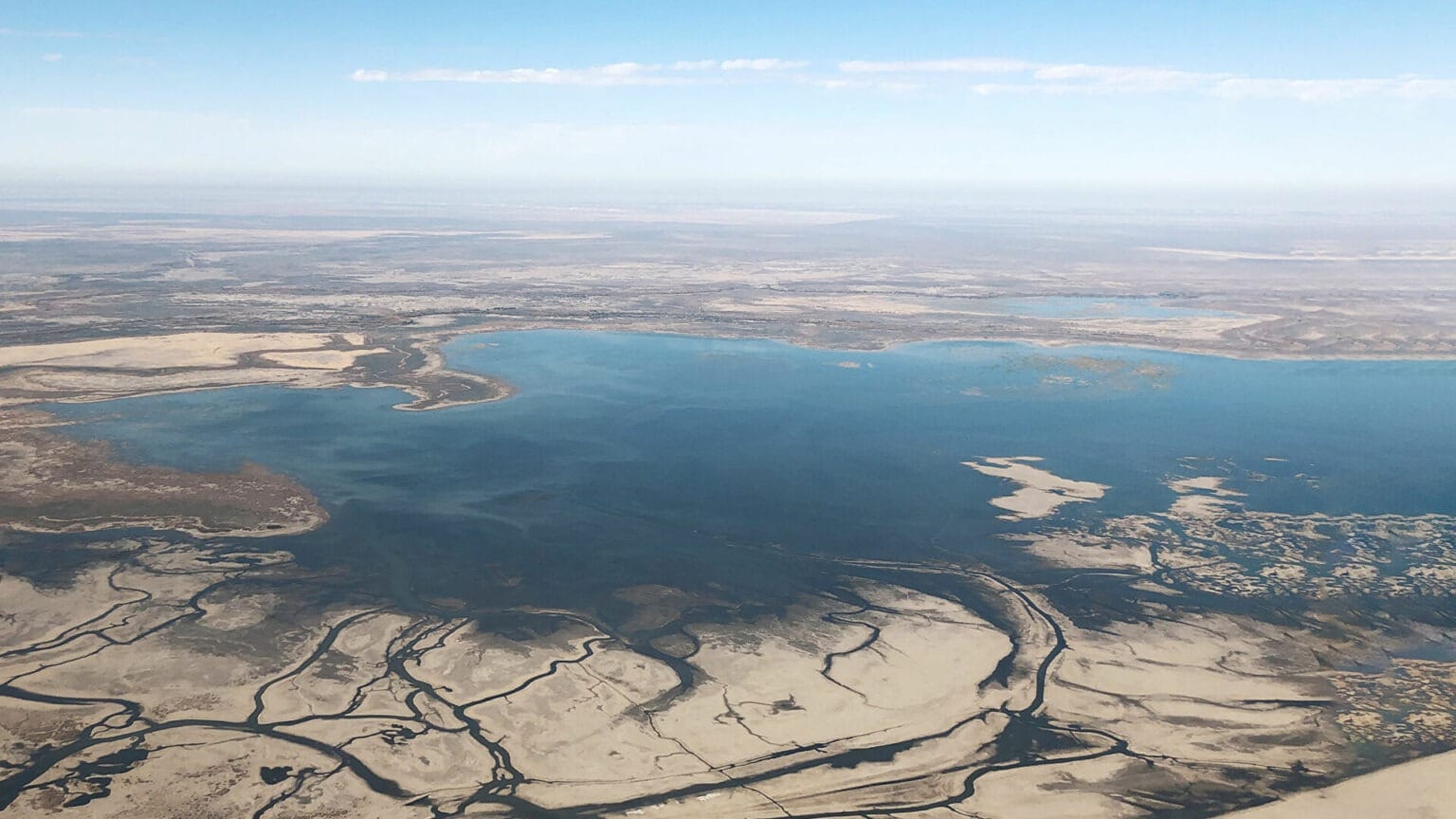
Together with the World Bank and the EBRD, the country plans to increase the area of the Northern Aral Sea to 3,900 square kilometers, and the water volume to 34 cubic kilometers, Inbusiness.kz reports.
The essence in brief
- The first phase of the project "The Northern Aral Sea and Modernization of Irrigation Systems" includes 133 projects; the main work is planned to be completed in 2030.
- The area of the Northern Aral Sea should grow to 3,900 km², and the water volume to 34 km³; today the sea holds about 23.4 billion m³.
- With the EBRD, they plan to restore 56 canals with a total length of more than 676 km in the East Kazakhstan region and the Abai region.
- A separate EBRD project concerns the reconstruction of wastewater treatment facilities in Ridder with a capacity of 19,000 m³ per day.
What was discussed at the Coordination Council
The meeting of the Coordination Council for Cooperation between the Government and International Financial Organizations was chaired by Prime Minister Olzhas Bektenov. It was attended by representatives of the World Bank, the European Bank for Reconstruction and Development, the International Finance Corporation, and the Eurasian Fund for Stabilization and Development. Several more institutions, including the Eurasian Development Bank, the Islamic Development Bank, the Asian Development Bank, and the French Development Agency, joined via video link.
Part of the agenda was devoted to housing finance and mortgages, but for the environmental topic the key block was water: restoration of the Northern Aral Sea, modernization of irrigation systems, and municipal infrastructure.
What will happen to the Northern Aral Sea
The first phase of the project "The Northern Aral Sea and Modernization of Irrigation Systems" is being implemented jointly with the International Bank for Reconstruction and Development, and work in the Kyzylorda and Turkistan regions has already begun. It includes 133 projects of RSE "Kazvodkhoz" and SCE "Turan-Su." According to the government, they should increase the area of the Northern Aral Sea to 3,900 km², and the water volume to 34 km³. The project provides for the reconstruction of more than 1,400 km of irrigation networks, major repairs of the reservoir, and automation of water accounting in irrigation systems. The main work is planned to be completed in 2030.
Irrigation here is directly linked to the sea: water saved through water-saving irrigation systems should be directed to the Northern Aral Sea. The question of scale remains open, because Kazakhstan is modernizing thousands of kilometers of irrigation canals, but is it keeping up with the scale of the problem, we have already examined separately. The World Bank's Country Manager for Kazakhstan, Andrei Mikhnev, confirmed the bank's readiness to provide expert and financial support in the long-term management of the region's water resources.
What this stage starts from
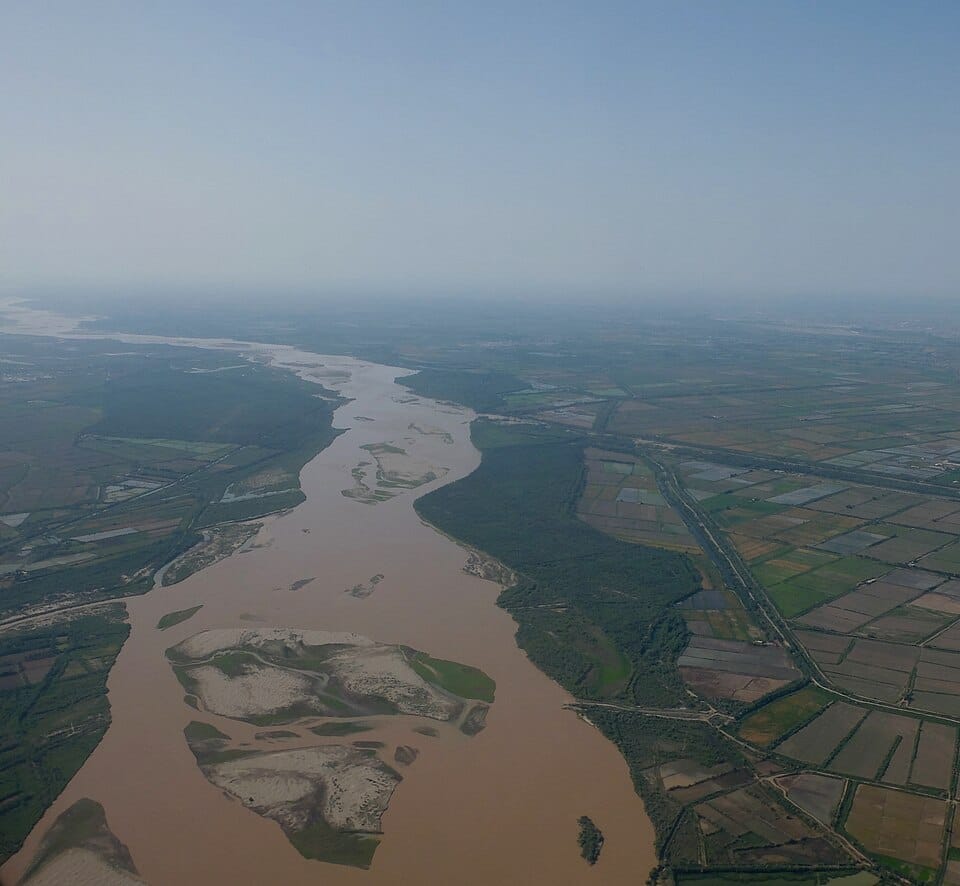
The new project builds on the momentum already achieved. According to the Ministry of Water Resources and Irrigation, at the beginning of 2022 the Northern Aral Sea held 18.9 billion m³ of water, and today about 23.4 billion m³. From October 2025, approximately 1.2 billion m³ was directed into the sea via the Syr Darya. Currently, the inflow is 14 m³ per second, and by the end of the vegetation period it is planned to be increased to 100-150 m³ per second.
At the same time, reforestation continues on the dried bottom of the Aral Sea, which helps stabilize the soil and reduce dust storms.
Why the return of water is important for the climate as well
Greening the bottom is useful for combating dust, but the return of water has an additional argument. Spanish scientists calculated in a study published in Science that since the onset of desiccation, the exposed bottom of the Aral Sea has emitted about 748 million tons of CO₂, and another approximately 605 million tons may be released in the future. According to the authors' estimate, greening has virtually no effect on these emissions; only the return of water can stop them. They also proposed turning the prevented emissions into carbon credits worth from 3.1 to 15.8 billion euros, which could partially finance restoration.
Regional framework: transboundary water
The Aral Sea cannot be restored by the efforts of one country alone, because it is fed by the Syr Darya and Amu Darya, and Kazakhstan remains a downstream water user. Therefore, the regional level is also important: in July, the World Bank approved the CAWEC program worth $20 million for the Executive Committee of the International Fund for Saving the Aral Sea. The money will go toward harmonizing approaches to water management and preparing up to six transboundary investment projects by 2031, and according to the bank's estimates, about 40 million people will benefit. If Kazakhstan's national projects provide infrastructure, such programs create a framework for agreements with neighbors.
Canals in the east and treatment facilities in Ridder
The second major project is being implemented with the EBRD. It provides for the restoration of hydraulic structures and 56 canals with a total length of more than 676 km in the East Kazakhstan region and the Abai region. According to the government's forecast, water availability for irrigated land will increase from 80,600 to 92,300 hectares, and the volume of water accumulation from 42.7 to 114.5 million m³.
Another area of cooperation with the EBRD concerns municipal infrastructure. Minister of Industry and Construction Yersaiyn Nagaspayev reported plans to reconstruct sewage treatment facilities in Ridder with a capacity of 19,000 m³ per day. The upgrade should improve water quality in the Tikhaya River basin, and the EBRD Managing Director for Central Asia and Mongolia Huseyin Ozhan confirmed the bank's intention to participate in the modernization of the country's water and municipal infrastructure.
The Caspian as a second task
The same instructions from the head of state concern not only the Aral Sea but also the Caspian, where the situation is the opposite: the sea is not recovering but continues to shallow. In September, five Caspian countries agreed on an interstate program to save the Caspian within the framework of the Tehran Convention, and at the Aktau port they have already begun deepening the water area to 7 meters due to the shallowing of the Caspian. If in the Aral Sea funding is going toward restoration, then in the Caspian, for now, the focus is mainly on adaptation to falling water levels and interstate coordination.
Author's conclusion
The Northern Aral Sea remains a rare example of efforts to save a body of water producing a measurable result: water volume has grown from 18.9 billion m³ at the beginning of 2022 to about 23.4 billion m³ today. The new stage involving the World Bank and the EBRD shows that further growth depends not only on water releases from the Syr Darya but also on how efficiently water is used in canals and fields. Added to this is the climate argument: if the conclusions of the Spanish scientists are confirmed, every cubic meter returned to the sea also works against CO₂ emissions from the dried bottom. The main question now is the timing and quality of implementation: the main work is planned for 2030, and it is precisely by then that it will become clear whether the sea can be brought to 34 km³.
Comments ()