World Bank to allocate $20 million to address Central Asia's water issues — 40 million people to benefit
The World Bank’s Board approved the new CAWEC regional program — $20M to boost Central Asian cooperation on transboundary water resource management.
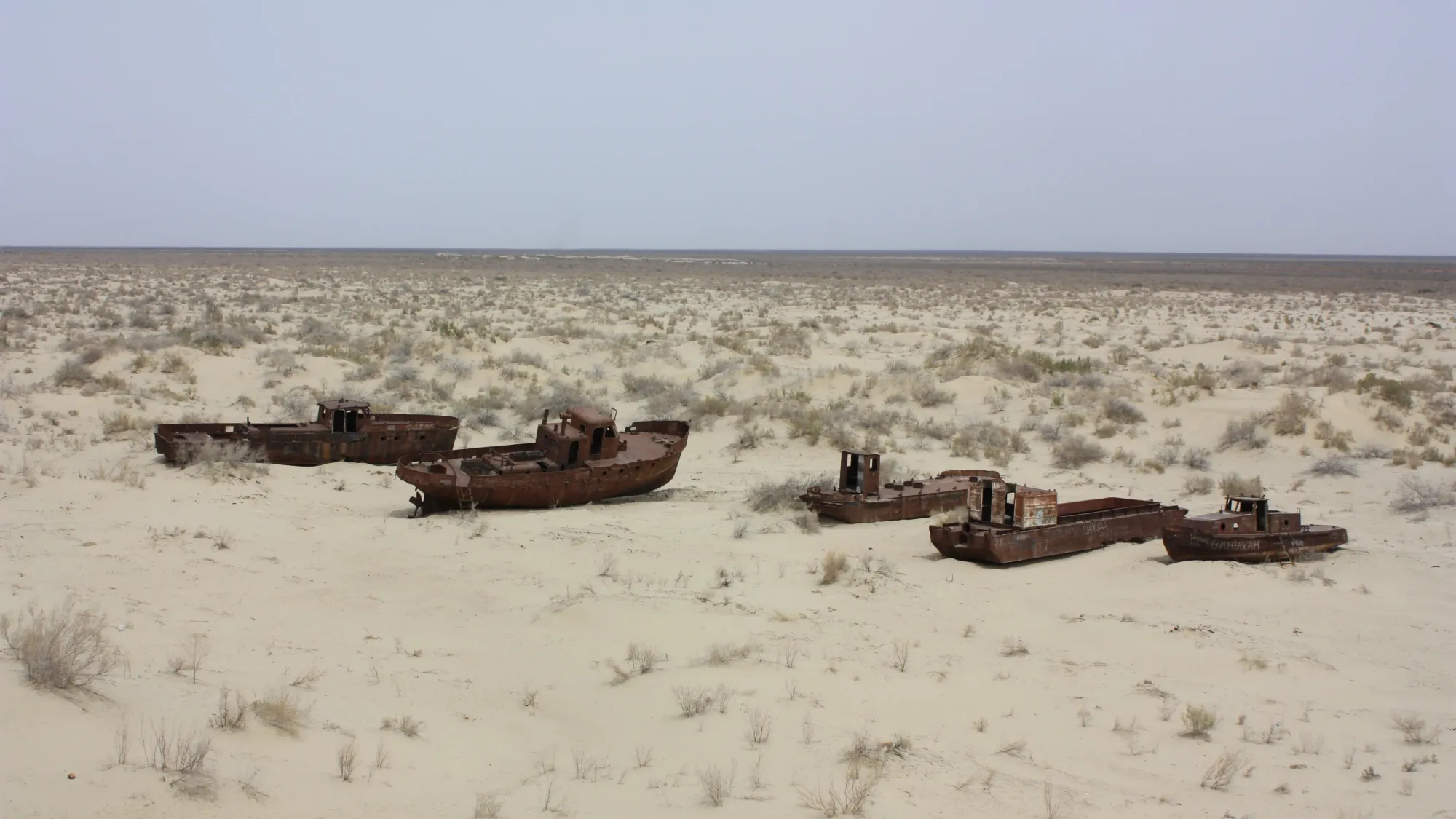
The funds will be received by the Executive Committee of the International Fund for Saving the Aral Sea. According to the Bank's calculations, about 40 million people will benefit from the program's implementation, KursivMedia reports. For Kazakhstan — a country with officially recorded water scarcity — this is one of the few tools capable of systematically improving the situation with transboundary rivers.
In short
- $20 million in the form of a grant will go to the Executive Committee of the IFAS to coordinate the regional program jointly with the states of the region.
- The main goal is to develop unified approaches to water management and prepare transboundary investment initiatives. By 2031, up to six transboundary investment projects should be prepared — the foundation for modernizing irrigation, building water storage facilities, and joint infrastructure operation.
- Over the past 60 years, the area of glaciers in the region has shrunk by almost a third. Due to inefficient joint use of water resources, Central Asian countries lose more than $4.5 billion annually.
- A separate block is digital transformation: updating water monitoring and accounting systems, modernizing information platforms for managing the Amu Darya and Syr Darya basins.
- Up to 100 specialists from relevant organizations will undergo training. Countries will be able to more actively exchange experience and conduct joint research.
Why $20 million is little but important
At first glance, $20 million is a modest sum for a region with chronic water problems. But the nature of this grant is different: it is not intended for building reservoirs or canals. This is money for preparatory work — aligning the positions of the five states, developing joint projects, and creating institutional mechanisms without which any infrastructure investments will either not materialize or prove ineffective.
It is precisely the lack of such a coordination base that is the main obstacle to attracting large-scale financing for Central Asia's water infrastructure. The Development Bank understands this and is funding the system-forming level — not specific pipes and canals.
A problem that is only growing
The need for the project is driven by several factors. A significant portion of the hydraulic infrastructure was built decades ago and requires modernization. Information exchange between states using the Amu Darya and Syr Darya basins remains limited, and existing interaction mechanisms do not always allow for prompt joint decision-making.
Added to this is the climate factor. We have already written that the flow of the Amu Darya in its lower reaches has decreased by 77% — and the main cause is not climate, but irrigation water withdrawal. Meanwhile, glacier melting in the short term creates a temporary increase in flow, but in the long term threatens its sharp decline.
Spanish scientists propose an option for attracting financing to address the Aral Sea environmental disaster.
Kazakhstan context
Kazakhstan is a lower riparian user of water on the Syr Darya: how much water reaches the country is determined not only by the condition of Kazakhstan's canals, but also by how much is taken upstream by Kyrgyzstan and Uzbekistan. That is why transboundary water cooperation for Kazakhstan is not abstract diplomacy, but a direct economic interest.
Against this backdrop, the CAWEC program takes on special significance. The Shardara Reservoir started 2026 at 79% of normal capacity, snowpack in the upper Syr Darya has been below normal for the third consecutive year, and Kazakhstan is officially recognized as a country with a high level of water stress. In these conditions, any tool that increases the predictability of transboundary water flows directly impacts the country's food security and agricultural sector.
Author's conclusion
$20 million from the World Bank is an investment not in pipes, but in trust: between five countries that have been unable to agree on joint water management for decades. If the CAWEC program truly launches the mechanism for preparing six transboundary investment projects by 2031, significantly larger financing will follow. This is exactly how such grants work — not as a solution to the problem, but as a key to the door behind which it lies.

Comments ()